
Roof Replacement Cost In Ontario: A Short Guide
Most people start thinking about a new roof for one of a few reasons. The roof’s just old. A storm rolled through and did some damage. A “small” repair turned into something bigger once we got up there. Or they’re selling and the place needs to show well. Whatever got you here, the first question is almost always the same.
What’s this going to cost me?
And the honest answer is: it depends. Roof replacement cost in Ontario isn’t a flat number you can pull off a chart. It moves around based on your house, the materials you pick, and who you hire to do the work. We’ve quoted enough roofs over the years to know that a clean, simple job on one home can run double on the place next door. Same street, same builder, different roof. Not always obvious until someone’s actually up there measuring.
So instead of throwing a single price at you and pretending it’s gospel, we’ll walk you through what actually drives the cost of replacing a roof in Ontario — the stuff that shows up on your invoice, and the stuff that hides behind it. If you’re specifically in Whitby, we’ve also broken down new roof cost in Whitby on its own page. We’re CD Roofing & Construction Ltd., and we’ve been pricing and installing roof replacement projects across Ontario since 1994. Here’s how a real quote comes together.
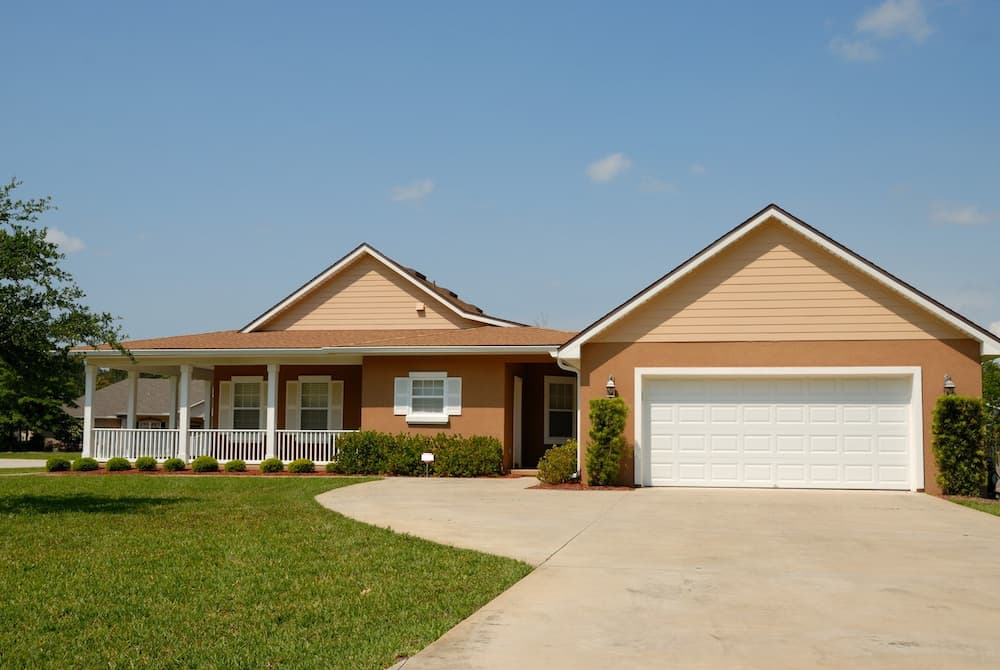
What Actually Drives the Cost of a Roof Replacement
There’s no single lever here. The price is built out of six or seven moving parts, and a contractor who’s any good can explain every one of them to you. If someone hands you a number without walking the roof first, be careful. Here’s what goes into it.
1. The type of roofing materials you choose for your project
Materials are the big one — roughly 45% of the total on most jobs. What you put on the roof drives the rest of the budget, and the spread between the cheapest and the most expensive option is wider than most people expect. The common choices for Ontario homes are asphalt shingles, cedar shakes, concrete or clay tile, metal, and flat roofs.
Asphalt shingles are the most affordable and the most common by a mile, and a good architectural shingle will give you somewhere in the range of 25 to 30 years if it’s installed properly. Metal lasts longer and barely needs maintenance, but you’ll pay more up front. Clay and concrete tile look great and last a long time, but they’re heavy and pricey, and not every home is framed to carry them. Flat roofing materials are usually a rubber membrane or a synthetic, and they live or die on the install — a sloppy seam is a leak waiting to happen.
One thing worth saying out loud: the cheapest shingle is rarely the cheapest roof. A budget product that gives up after 12 years costs you more than a mid-grade one that goes 28. We’ve seen this a lot.
2. The size and complexity of your roof
Square footage is the obvious part — more roof means more material, more labour, more days on site. But complexity is the sneaky part, and it’s where the surprises usually live. Steep pitch, multiple stories, dormers, odd shapes, and a roof that’s a pain to get a ladder onto all push the number up. A bigger job can run $12,000 to $15,000 or more on a 2,000-square-foot home, and a tricky cut-up roof can land well past that.
Every angle, hip, and valley is another spot that needs flashing and careful detailing — and this is where most roofs fail, not out in the open field. If your home has skylights, chimneys, or a bunch of penetrations, expect that to add to the total. They all need to be sealed and flashed right.
And steep roofs just take longer. A crew can’t move at the same pace on a 12/12 as they can on a low slope — they’re working with harnesses and a lot more caution, and rightly so. Slower and safer means more labour hours.
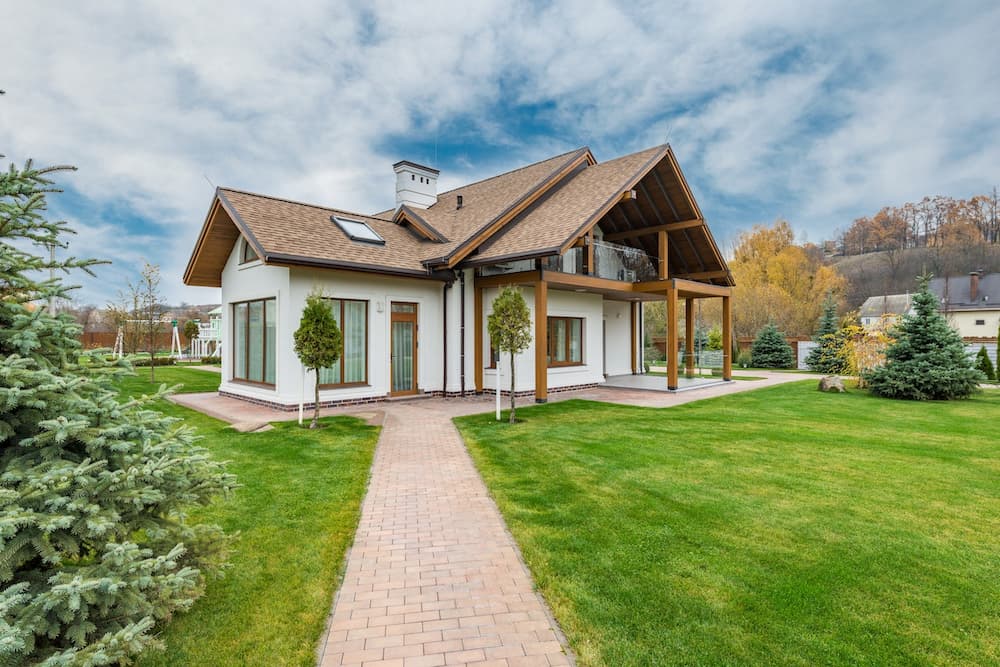
3. The labour associated with the job
After materials, labour is the next biggest line on the invoice. It’s usually priced by the square foot, and most roofers work out to roughly $2 to $7 per square foot, or somewhere around $50 to $150 an hour depending on the crew. Quick note on the lingo: a “roofing square” is a 10×10 patch — 100 square feet — and roofs get measured in squares, not feet, in most quotes.
So on that 2,000-square-foot roof, labour alone can run anywhere from about $4,000 to $14,000. That’s a huge range, and the reason it’s so wide comes back to complexity and crew. Specialized work — multiple levels, a complicated design, brutal roof access — pushes it up fast. And not all crews are equal. A seasoned crew that’s framed and finished thousands of roofs works cleaner and faster than three guys who answered a Kijiji ad last spring. You’re paying for that experience, and on a roof, it matters more than almost anything else.
4. The removal of existing materials
Before the new roof goes on, the old one has to come off, and that tear-off costs money — often $1 to $3 per square foot. How much depends on what’s up there and how stuck it is. Asphalt is the quickest and cheapest to strip. Metal and older flat-roof systems take more time, and flat-roof materials sometimes need special disposal.
Here’s something Ontario homeowners should know: the building code generally caps you at two layers of shingles, and plenty of the time the right call is a full tear-off down to the deck anyway. You can’t see what’s under the old shingles until they’re off — and every so often we pull a layer and find soft, rotten decking underneath. That’s not the contractor padding the bill. That’s plywood that’s been quietly soaking up water for years (this matters more than people think). It has to be replaced, or your shiny new roof is going over a bad foundation.
Some contractors fold removal into the quote, some bill it separately. Just ask up front so it’s not a surprise.
5. Contractor’s operational costs
Every legitimate roofing contractor has costs just to keep the doors open, and a slice of that gets built into your quote as overhead — usually somewhere in the $150 to $300 range. It covers the stuff that keeps a real company running:
- insurance and general liabilities
- worker’s compensation
- tool and equipment maintenance
- license fees
- marketing and advertising costs
- vehicle fuel, truck yardage, and delivery charges
It’s a small piece of the overall number, so it shouldn’t make or break your decision. But honestly? It’s also a tell. A contractor carrying proper insurance and WSIB coverage costs a little more than the guy working off the books — and that little bit is exactly what protects you if something goes wrong on your property.
6. Other additional costs
Every project is a little different, and there’s almost always a handful of extras. Flashing, drip edge, underlayment, gutters, downspouts, and skylights all add to the total. None of them are optional if you want the roof to actually keep water out — they’re just easy to forget when you’re staring at the headline price.
Depending on the job, you might also be looking at:
- a crane rental fee for large-scale projects
- miscellaneous expenses such as dump fees, permits, taxes, and delivery fees
- specialized roofing materials
- weather delays or overtime charges for working during peak season
- structural repairs
- roof upgrades for energy efficiency and improved insulation
One more Ontario-specific thing people miss: most quotes are written before tax, so remember to add 13% HST on top. On a $12,000 roof that’s another $1,560 — not pocket change. A good contractor will spell all of this out before the job starts so there are no surprises when the final invoice lands.
7. The time of year you book the work
This is the one most homeowners never think about, and in Ontario it genuinely affects both price and quality. Roofing has a busy season — late spring through fall — and when everyone wants a roof at once, pricing firms up and the calendar fills. Book in the slower months and you’ll sometimes find better scheduling and a little more flexibility on price.
But there’s a catch, and it’s a real one. Asphalt shingles need warm, direct sun for a few days to seal down properly — that’s the adhesive strip bonding in the heat. Install in deep cold and those shingles may not fully seal until spring warms things up. Most manufacturers say so right in their own warranty language. A good crew knows how to hand-seal and work around a cold snap, but if someone’s slapping a roof on in January and not adjusting for it, you can end up with shingles lifting in the first decent wind.
And this is Ontario — our freeze-thaw cycles are hard on roofs. Water gets into a small gap, freezes overnight, expands, and pries it open a little more. Do that a few hundred times over a winter and a minor flaw becomes a leak. A roof here has to be installed for our climate, not just installed.
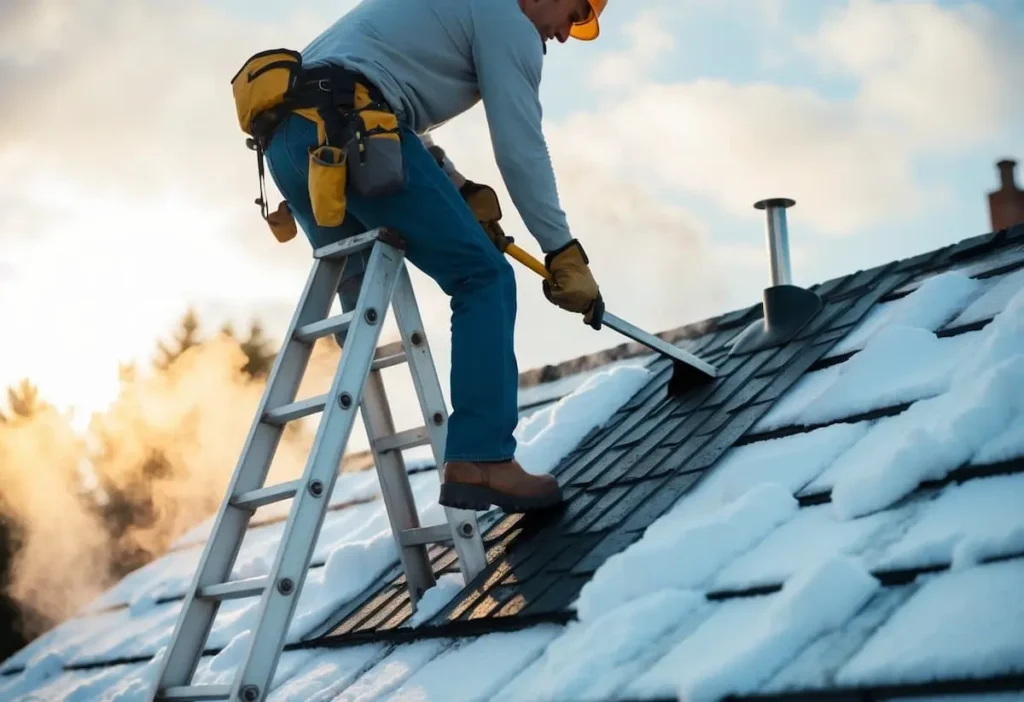
Repair or Replace — Which One Do You Actually Need?
Not every roof that looks rough needs to be torn off. Before you commit to the full cost of a replacement, it’s worth asking whether a repair buys you another five or ten good years. Sometimes it does. Sometimes you’re throwing money at a roof that’s already done.
A few honest rules of thumb. If the roof is under 15 years old and the damage is localized — a few lifted shingles, one bad valley, a leak around a single penetration — a repair usually makes sense. If it’s pushing 20-plus years, you’re seeing granules filling the gutters, shingles curling across the whole field, or multiple leaks in different spots, you’re past the point where patching pays off. At that stage every repair is just buying a few months before the next call.
A lot of people think a few missing shingles isn’t a big deal. It usually is — or at least it’s the visible edge of something bigger. We’ll always tell you straight which side of that line your roof is on, even when the answer is “you’ve got a couple more years, hold off.” We’d rather earn the replacement when it’s actually time than sell you one you don’t need yet.
Finding The Right Contractor
Here’s the thing about roofing quotes — no two contractors are the same, and the same job can come back with wildly different numbers, services, and warranties. When you pick purely on the lowest price, you usually end up with the contractor who got there by cutting corners or using cheaper material. Some of what that costs you down the line:
- The contractor may not always be present to ensure quality workmanship
- You may not get the best and safest possible materials you pay for
- The contractor may take shortcuts to finish the job quickly and cheaply
- The contractor may be inexperienced or lack the necessary qualifications
- You will pay more money in the long run to fix the low-quality work
- The roof will not last as long as a quality job
- You will not get the best roof warranties
So do your homework. Check reviews and references, ask about their experience and the kind of roofs they’ve actually done, and make sure they’re licensed, insured, and carrying WSIB coverage. Get an itemized quote — not a one-line number — so you can compare apples to apples and spot any hidden costs. And read the contract properly before you sign it. Boring advice, but it’s the part people skip and regret.
We’re based in Whitby and handle roof replacements across Whitby and the Durham Region, though we work right across Ontario. Been doing it since 1994, we’re BP Gold Certified, fully insured, and we back our workmanship for 10 years. If you’d rather skip the runaround, you can just call us here at CD Roofing & Construction Ltd. We’ll come take a look and tell you straight.
Frequently Asked Questions
When you factor in all the costs and fees associated with a roof replacement project, the average cost for replacing a 2000 sq. ft. roof in Ontario can range between $10,000 – $15,000. This cost can vary depending on the materials used and the complexity of the project. Every project is unique, and we will provide an accurate estimate based on your specific requirements.
Our installers can work more easily on homes that have a 3/12 pitch, which means that labour costs for installation will be lower. Additionally, homes with no chimneys or skylights, with few valleys or hips, and with few penetrations will also cost less. All of these factors can affect the cost per square foot, but on average, roofing in Ontario can cost anywhere from $3 – $5 per sq. ft. depending on your particular project.
The average roof replacement cost in Ontario will depend on the size of your home, the complexity of the project, materials used, labour, and any additional services required. For a 1000 sq. ft. home, a new roof can cost anywhere between $6,000 – $10,000 on average. We can provide an accurate quote based on your specific requirements here.
Generally, the cost of a new roof is based on the factors we have mentioned: type of material, size and complexity, labour, material removal, contractors operating expenses along with additional situational expenses for custom roofs.
Roof replacement is a complex process that requires specialized knowledge and expertise. It also involves the use of expensive materials and tools as well as labour costs. All of this contributes to the overall cost. However, investing in a high-quality roofing system now can save you from higher costs in the future due to repairs, maintenance, and/or premature replacement.
In most Ontario municipalities, a like-for-like reshingle does not require a building permit, but structural work usually does. If you are replacing decking, changing the roofline, or altering the slope, expect to need one. Rules vary from city to city, so it is worth a quick call to your local building department before the work starts. We handle the permitting on jobs that call for it.
Sometimes, yes. Demand drops in the colder months, so you may find more flexible scheduling and pricing in late fall and winter. The trade-off is that asphalt shingles need warm, direct sun to seal properly, so a roof installed in deep cold may not fully seal until spring. An experienced crew knows how to hand-seal and work around it, but the timing of your install still matters for how the roof performs.