
Can You Put a New Roof Over Old Shingles in Ontario?
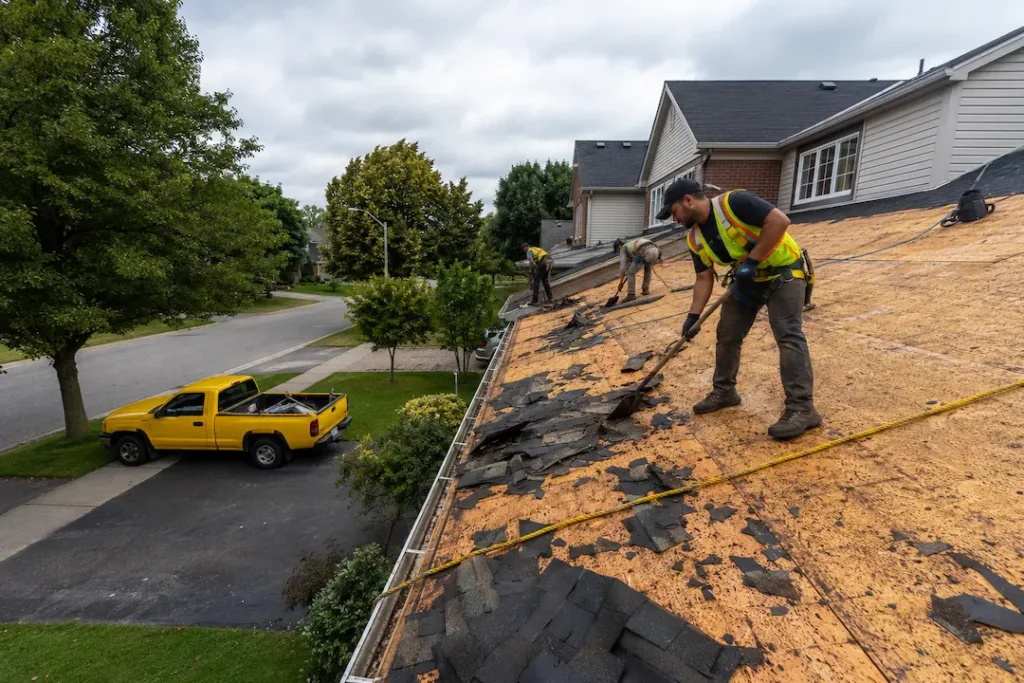
It is one of the most common questions we hear when a roof reaches the end of its life: can you just shingle right over the old ones and skip the tear-off? Less labour, less mess, less money — on paper it sounds like an easy call. The honest answer, after replacing roofs across Whitby and Durham Region since 1994, is that it depends entirely on what is already up there. If you are already familiar with how roof replacement works in Whitby, this post gets into the specifics of overlays versus tear-offs and when each one actually makes sense.
What we can do is walk through what the Ontario Building Code actually says, the real factors that determine whether an overlay holds up, and the things worth reading the fine print on before anyone starts nailing. That is the conversation we have with most homeowners when they call us about a roof that is starting to go — so here it is in plain terms.
Before you dig in — related reading
If you want the bigger picture on replacement versus repair before getting into the overlay question, these pages cover everything discussed below:
- Our overview of roof replacement in Whitby — what a proper tear-off and re-roof looks like from start to finish.
- Real numbers in our Whitby roof cost guide — overlay versus tear-off pricing side by side.
- How long roof shingles last in Ontario — and what shortens that life in Durham Region specifically.
- Straight answers from our Whitby roofing team — no upsell, just an honest look at your roof.
The 30-Second Answer
Under the Ontario Building Code, a residential roof can carry a maximum of two layers of asphalt shingles. If your roof currently has one layer, a second layer — called an overlay — is legal. If it already has two, everything comes off down to the deck before anything new goes on. Legal and smart are not the same thing, though. An overlay hides whatever is wrong underneath, traps heat, often voids most of the shingle warranty, and can reduce your home’s value at resale. Because condition, deck integrity, flashing, and ventilation all factor in, the only way to know which is right for your home is to have someone get up there and look — but understanding what drives the decision helps you follow the conversation when they do.
Can You Put a New Roof Over Old Shingles in Ontario?
Yes — one overlay is permitted. The Ontario Building Code caps residential roofs at two layers of asphalt shingles, so if your home currently has one layer, a second is code-compliant. If it already has two layers, a full tear-off is required regardless of condition. A like-for-like re-shingle typically does not require a building permit, which makes an overlay feel like a low-friction shortcut. What the Code establishes, though, is the minimum legal standard — not the standard that is going to get your roof through twenty Ontario winters without problems. Plenty of overlays are done legally, and many of them fail well before the new shingles’ rated lifespan. The code question and the performance question are two different questions, and it is worth keeping them separate.
What Factors Affect Whether an Overlay Makes Sense?
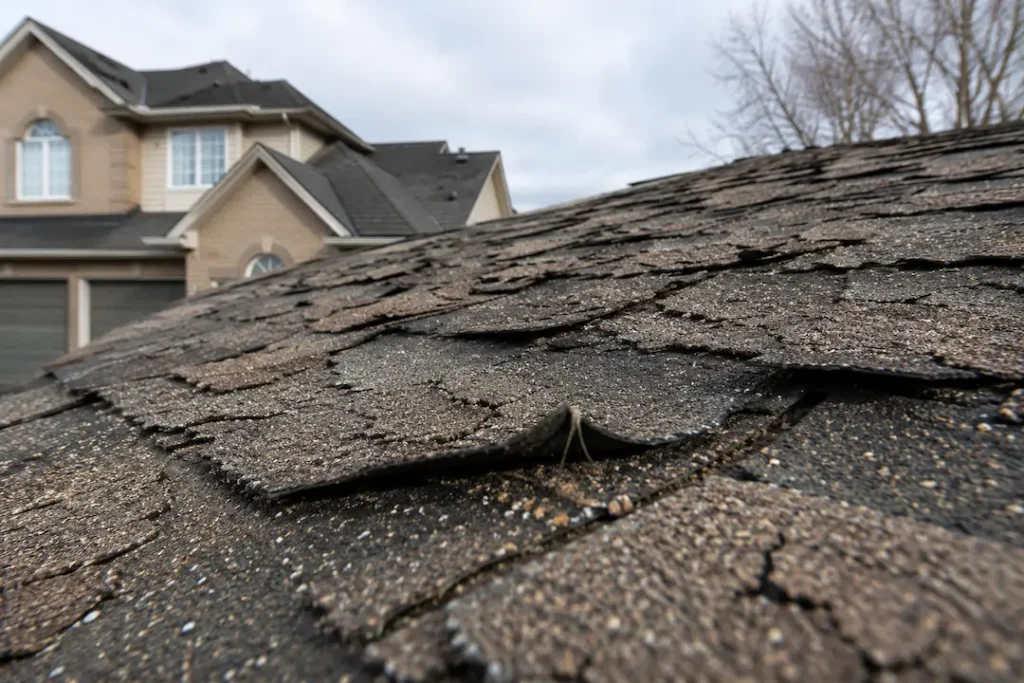
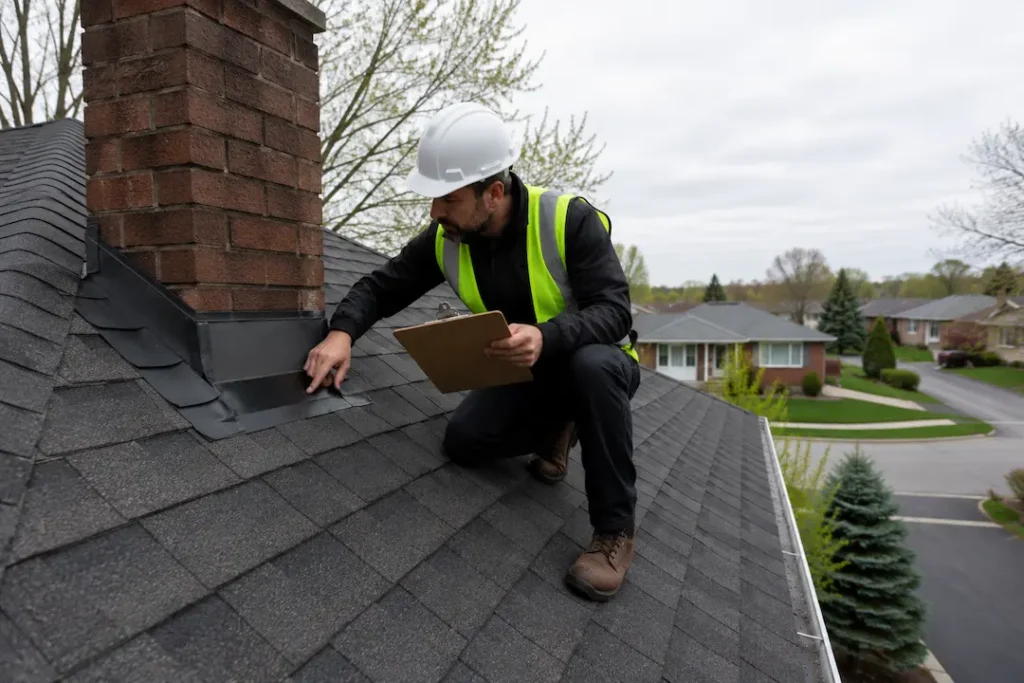
A handful of conditions do most of the work in determining whether an overlay is a reasonable call or a way of sealing problems into your roof for the next owner to deal with. The condition of the existing shingles is the first — they have to lie completely flat, with no curling, cupping, buckling, or missing sections, or the new layer telegraphs every imperfection and fails early. The deck underneath is the second: dry, structurally sound, no soft spots or rot. The third is flashing — an overlay reuses the existing flashing around chimneys, valleys, skylights, and vents, which are the exact spots where roofs most commonly leak. If any of that flashing is worn out, an overlay just puts new shingles over a leak waiting to happen. Ventilation and heat load also play a role: two layers of asphalt trap significantly more heat than one, and heat is what ages shingles fastest. A roof already running hot will age a second layer faster than the warranty assumes.
When Does Shingling Over Old Shingles Actually Make Sense?
There are situations where we will quote an overlay in good conscience. The existing single layer has to be flat and completely sound — no curling, no buckling, no soft spots. The deck underneath has to be dry and solid. And it helps if there is a clear, time-limited reason for choosing the less expensive option, such as preparing a home for sale within the next few years where a presentable roof is the goal rather than a twenty-year one. When all of those conditions line up, an overlay can be a reasonable, budget-conscious decision that still gives you several good years of service. The issue is how rarely all three align on a roof that is already worn out enough to need attention. Most roofs that have reached the overlay question have also reached the point where the deck and flashing need to be looked at — and an overlay does not allow for that.
When Is Putting a New Roof Over Old Shingles the Wrong Call?
Most of the time, frankly. We will not do an overlay when there is any sign of leaking or rot, because an overlay shingles directly over the problem rather than fixing it. We will not do one when existing shingles are curled, cupped, or missing, because a bumpy base creates a bumpy new roof that fails early. We will not do one when the flashing around chimneys and valleys is worn out — and the only way to replace flashing properly is a tear-off. And we will not do one when the roof is already running hot, because two layers of asphalt trap significantly more heat than one and can shave years off the new shingles’ rated life. If you are weighing whether repair makes more sense than replacement entirely, our roof repair vs. replacement guide for Whitby homeowners walks through how we think about that question.
Does a Two-Layer Roof Void My Shingle Warranty?
Usually most of it, yes, and it is worth understanding which part survives. The major manufacturers — BP, IKO, GAF — will typically honour the basic material defect warranty on the new shingles. What they will not cover is failure caused or accelerated by the condition of the old layer underneath. That is a meaningful gap, because the old layer is precisely what tends to cause premature failure in an overlay. If the existing shingles are in poor shape and the deck is borderline, the new shingles are not going to last the way the package says they will — and the manufacturer is not going to cover that. Workmanship coverage depends entirely on the installer. We stand behind a tear-off far longer than an overlay, because we can vouch for what is under a roof we took down to the deck. When we shingle over an existing layer we have not seen, we cannot make the same guarantee — and we will not pretend otherwise. Ask any roofer quoting you an overlay what their workmanship warranty actually covers, and read it before you sign.
What Is the Real Cost Difference Between an Overlay and a Tear-Off?
An overlay saves the tear-off labour and disposal cost — a real portion of the total job. For a typical Whitby home that is a meaningful number in the short term. But shingles installed on a compromised base perform worse than the rating assumes, and at the next replacement the homeowner pays to remove two layers instead of one — which adds both time and cost. When you spread the investment across the years of actual performance you get, a tear-off almost always wins on a cost-per-year basis. There are also softer costs worth considering: a two-layer roof flagged on a home inspection often becomes a negotiating point with buyers, and a roof that fails in year eight rather than year twenty is not the deal it looked like. For real numbers on what both paths look like for your home, our Whitby roof cost guide breaks down overlay versus tear-off pricing in detail.
Does Ontario Require a Building Permit to Shingle Over Old Shingles?
Re-shingling a residential roof — whether as an overlay or a full tear-off — typically falls under ordinary maintenance and repair under the Building Code Act, and does not require a building permit as long as the work is limited to replacing the roofing material without structural changes. That said, requirements vary by municipality. The Town of Whitby, City of Oshawa, and other Durham Region building departments each have their own interpretation of what triggers a permit, and work that changes the structural design of the roof — adding a dormer, raising a ridge, or altering a roof deck — requires a permit regardless of shingle work. The safest first step is to ask your roofer directly, before any work starts. A reputable contractor will know exactly what applies in your municipality and will pull any required permits on your behalf. If your project is straightforward maintenance, the permit question is usually simple — but it should be confirmed, not assumed.
Frequently Asked Questions
Is it legal to put a second layer of shingles over the first in Ontario?
Yes. The Ontario Building Code permits a maximum of two layers of asphalt shingles on a residential roof. If your roof currently has one layer, a second layer is code-compliant. If it already has two, a full tear-off down to the deck is required before new shingles can be installed.
Does a two-layer roof void my shingle warranty?
Usually most of it, yes. Major manufacturers such as BP, IKO, and GAF will honour the basic material defect warranty on new shingles but will not cover failures caused or accelerated by the old layer underneath. Workmanship coverage is also limited on overlays, because the contractor cannot inspect or vouch for what is below the new shingles.
Does an overlay hurt resale value in Durham Region?
It can. Home inspectors routinely flag two-layer roofs in their reports, and buyers read that as a future expense — because when the overlay eventually fails, the next replacement requires a more expensive double tear-off. A two-layer roof often surfaces as a price reduction at the negotiating table, commonly by several thousand dollars.
Does Ontario require a building permit to shingle over old shingles?
Re-shingling typically falls under ordinary maintenance and does not require a permit as long as no structural changes are made — but requirements vary by municipality. Ask your contractor before any work starts. A reputable roofer will know exactly what Whitby or your Durham Region municipality requires and will pull any necessary permits.
Talk to C.D. Roofing About Your Whitby Roof
If you would rather get a straight answer than guess at it, we are glad to get up on your roof, check the layers, the deck, the flashing, and the ventilation, and tell you plainly whether an overlay is a fair option or whether you will be money ahead with a full tear-off. No pressure, no obligation.
C.D. Roofing & Construction Ltd.
8 Mildenhall Pl., Whitby, ON L1M 0C9
Phone: (905) 430-7911