
Should I Call a Wildlife Removal Company or a Roofer?
Short answer: call a roofer who understands wildlife exclusion — not a wildlife removal company who happens to climb on roofs.
Wildlife removal companies are licensed to trap and remove the animal. That’s their job, and most of them do it well. The problem starts when they try to “seal up” your roof afterward. We see it constantly: chicken wire screwed straight through shingles, random holes drilled into vents, caulking smeared across flashing, and “temporary” patch jobs that quietly turn into active leaks six months later.
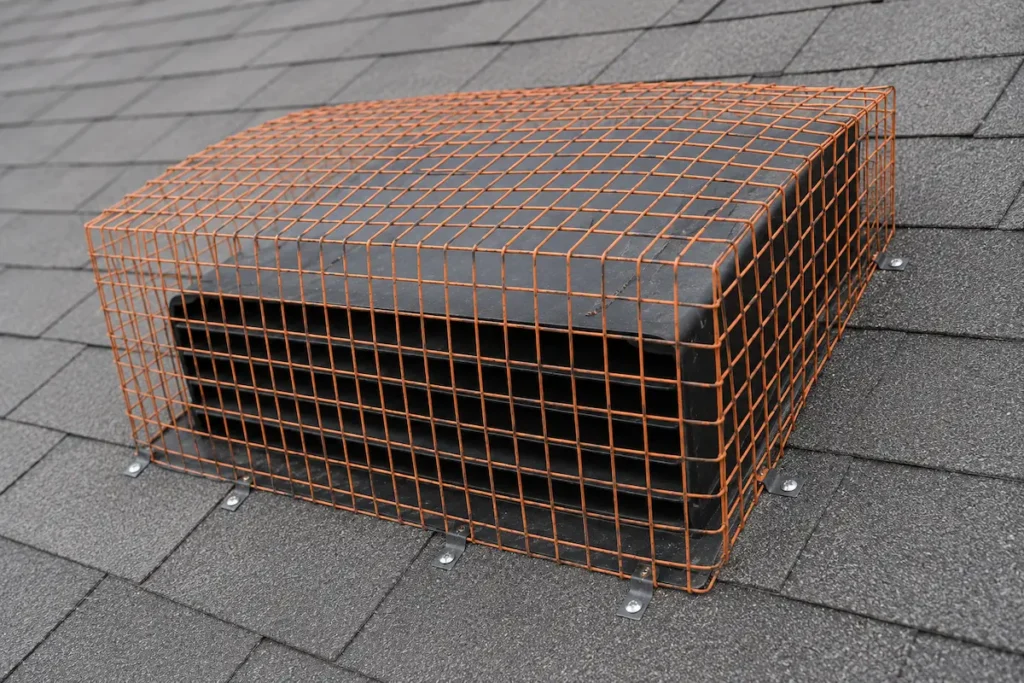
Stopping the raccoon is only half the job. Protecting the roofing system is what actually matters. Once water gets in behind a poorly sealed exclusion job, the real damage begins — rotted decking, soaked insulation, ceiling stains, mold. It’s the same pattern we see with storm roof damage.
If you want the animal out: a wildlife technician. If you want your roof to still be a roof afterward: a roofing contractor.
Who Should I Call for Animals in My Roof?
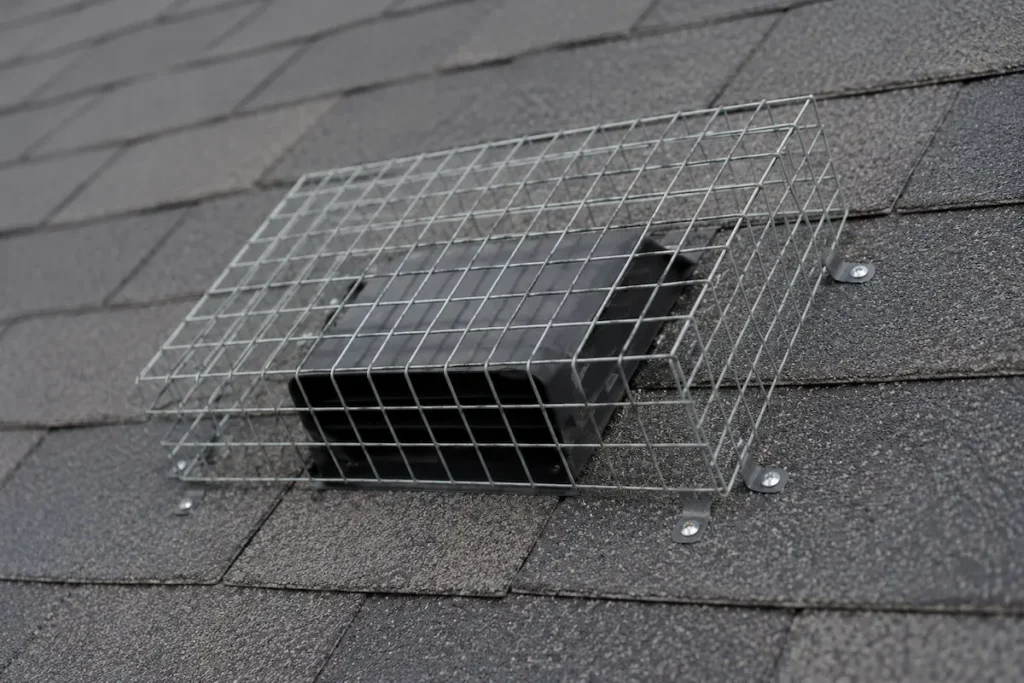
Here’s the order that saves you money:
- A roofing contractor that handles wildlife exclusion (like C.D. Roofing & Construction). We assess where they got in, how much damage they did, and what needs to happen to make the roof watertight again — and keep them out for good.
- A licensed wildlife removal technician to trap and relocate the animal humanely, if one is still inside.
- Back to the roofer to install permanent, waterproof exclusion — steel vent guards, proper flashing, sealed soffit returns, ridge cap repairs.
Calling the wildlife guy first and the roofer second is the expensive route. By the time you call us, we’re often repairing the trap-and-seal job and the original animal damage.
Do Wildlife Removal Companies Damage Roofs?
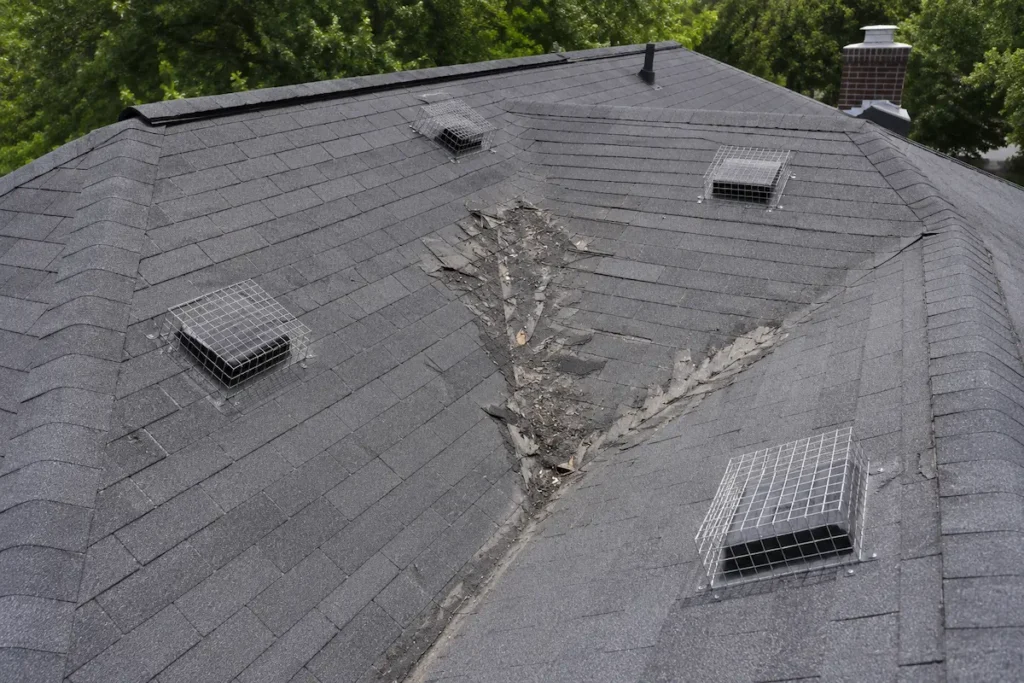
Not all of them — but enough that it’s a real problem. The damage we see most often on jobs we’re called to fix:
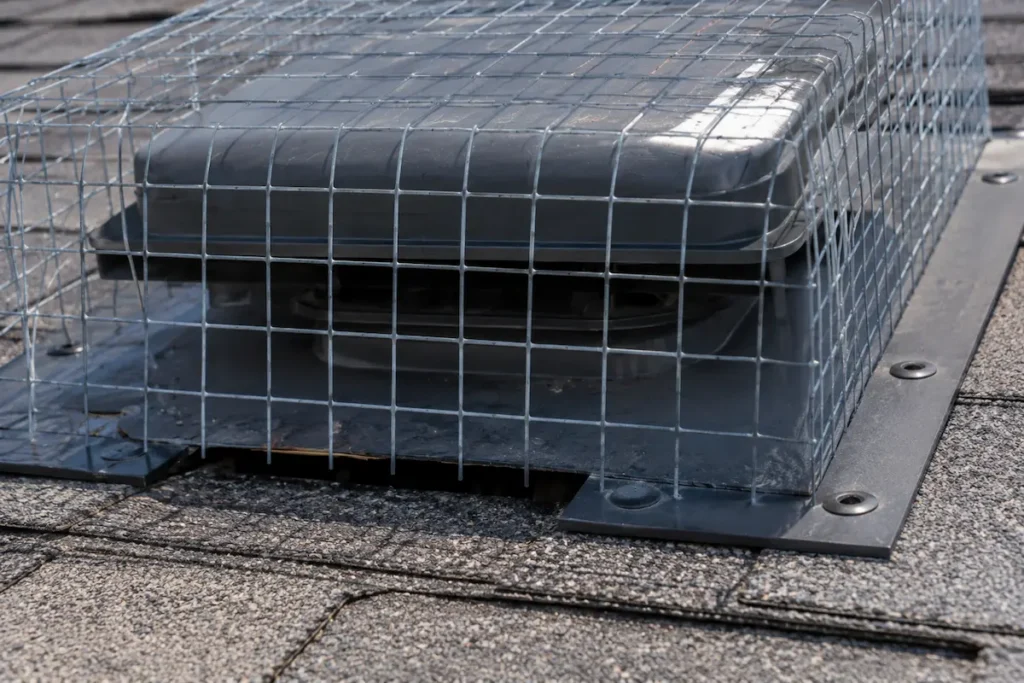
- Chicken wire and hardware cloth screwed directly through shingles. Every screw is a future leak. Shingles aren’t designed to be penetrated except where the manufacturer specifies (nailing strip), and never with raw mesh under tension.
- Random holes drilled through roof vents, soffits, and fascia — usually to fish out a nest or run wire. These rarely get sealed properly.
- Caulking used as a structural fix. Caulking is not flashing. It fails in 1–3 Canadian winters and water finds the path.
- Cages installed over the damage instead of repairing it. The animal is gone, but the entry hole, torn underlayment, and chewed shingles are still there — just hidden under a wire box.
- Plumbing stacks and exhaust vents left unflashed after being disturbed.
In the photos clients have sent us, you can usually see all of it in one frame: a plastic vent caged in cheap wire mesh, the mesh screwed through the surrounding shingles, gaps between the cage base and the vent collar wide enough for a squirrel, and torn shingles in the valley a few feet away that nobody even addressed.
That’s not exclusion. That’s a leak waiting for the next thaw.
How Do I Stop Animals from Getting Into My Roof?
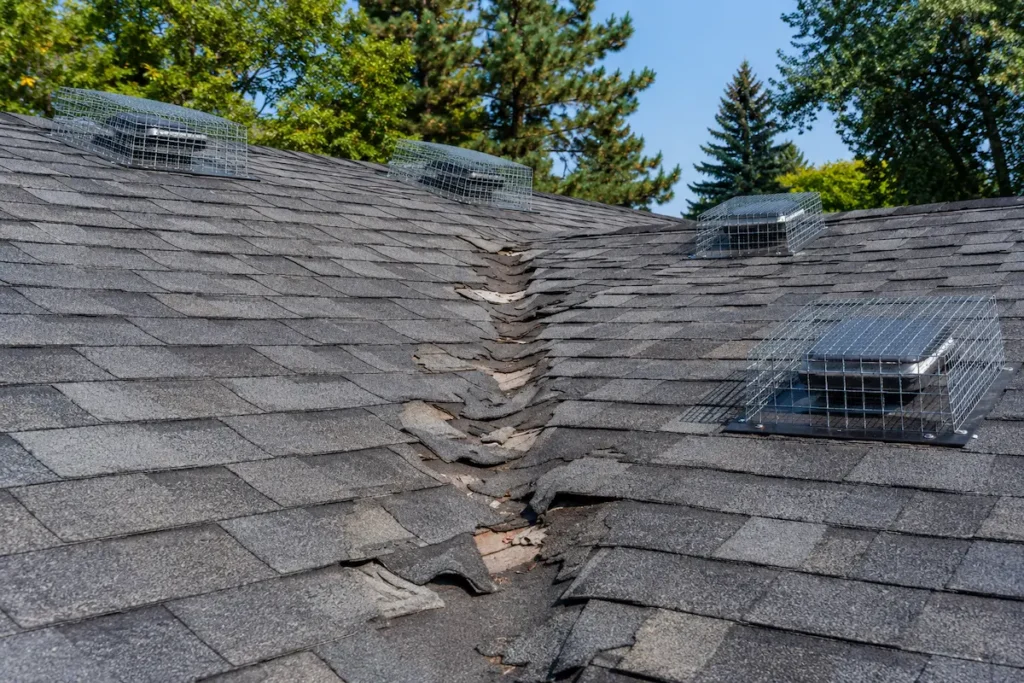
Permanent wildlife-proofing isn’t a wire cage. It’s a roofing detail. At C.D. Roofing & Construction, that means:
- Wildlife-proof steel protection systems — galvanized or stainless, sized to the vent, mechanically integrated without puncturing the shingle field.
- Proper waterproof flashing details at every penetration — vents, stacks, skylights, chimneys — so water sheds over the protection, not behind it.
- Roof-safe vent protection designed for airflow as well as exclusion. A blocked vent is a moisture and ice-dam problem.
- Soffit, fascia, and gable-end repairs done with matching materials so there’s no weak point left for the next raccoon to find.
- Long-term repairs to the surrounding roof — re-shingling damaged sections with the right roofing materials, replacing chewed underlayment, sealing nail pops properly.
The goal is a roof that keeps animals out and keeps water out, with no compromises between the two.
Why Homeowners Call C.D. Roofing for Wildlife Damage
We’re a roofing contractor first. We understand that every fastener, every flashing detail, and every penetration is either protecting your home or quietly failing. We’ve been called to repair more bad exclusion jobs across Durham Region than we can count — and the pattern is always the same: the animal problem was solved cheaply and the roof problem was created expensively.
If you’re staring up at chicken wire screwed through your shingles right now, or you can hear something scratching above the ceiling, call a roofer who handles wildlife exclusion — before the leaks start.
📞 C.D. Roofing & Construction 🌐 cdroofing.ca