
How Long Do Roof Shingles Last In Ontario?
Here’s something that’ll save you thousands: Most roofers won’t tell you that “30-year shingles” rarely last 30 years in Ontario.
Metal roofs can last 35-50 years, but they cost about 2-3 times more than asphalt. That’s why most Ontario homeowners install fibreglass asphalt shingles that last anywhere from 15-30 years (if you’re lucky). This type of shingle is the most cost-effective option for the Canadian climate we experience here in Ontario.
So, how long do roof shingles last in Ontario?
The real answer is: It depends.
And here’s where it gets interesting—two homeowners in Whitby can install the exact same shingle on the exact same day, and one roof will last 25 years while the other taps out at 17. We’ve seen it happen.
Why? Because there are so many variables at play that most people don’t even know to ask about.
The Durham Region Reality (That Nobody Talks About)
Let’s get specific here because generic roofing advice doesn’t cut it when you’re dealing with Lake Ontario weather patterns.
If your roof is anywhere in the Durham Region—Whitby, Oshawa, Ajax, Pickering—you’re dealing with a microclimate that’s uniquely brutal on shingles. That lake effect isn’t just giving you extra snow days (or taking them away, depending on how you look at it). It’s creating freeze-thaw cycles that happen way more frequently than they do just 50km north.
We replaced a roof in Ajax last summer that should’ve lasted 25 years but died at 17. The homeowner did everything right—quality shingles, proper installation, regular maintenance. But that house sat at the perfect angle to catch every single freeze-thaw cycle Lake Ontario could throw at it. The shingles literally cracked themselves to death.
Here’s what we’re seeing in Durham Region specifically:
Ice dams form about 40% more frequently here than in areas just north of the 401. The combination of lake-effect snow and those temperature swings creates the perfect conditions for water to back up under your shingles. One winter of ice dams can shave 3-5 years off your roof’s life.
The freeze-thaw cycle hits us about 15-20 times per winter in Oshawa and Whitby. Up in Peterborough? Maybe 8-10 times. That difference matters because every time your shingles freeze and thaw, they’re expanding and contracting. Do that enough times and even the best shingles start to fail.

The “30-Year Shingle” Myth (Yeah, About That…)
Let’s talk about the elephant on the roof.
When you see “30-year architectural shingle” on the package, that’s a laboratory rating under perfect conditions. No shade, moderate climate, ideal installation, regular maintenance, and probably a team of scientists monitoring every granule.
Your roof in Oshawa? Not quite the same situation.
Most manufacturers quietly expect their “30-year” shingles to last 20-25 years in real-world Ontario conditions. Some won’t even say that out loud. And here’s the part that really gets me—that “lifetime warranty” everyone loves to mention? Read the fine print. It’s prorated, which means after year 10 or 15, you’re covering most of the cost anyway.
We’re not saying warranties are worthless. We’re saying don’t make your roofing decision based on marketing language that sounds better than it actually performs.
Why Roofers Don’t Always Tell You Everything
There are certain things in this industry that contractors just don’t talk about. Not because they’re being shady (well, not always), but because it’s complicated and doesn’t fit on a quote sheet.
For example, nobody wants to tell you that installing shingles in October in southern Ontario is asking for trouble. The asphalt sealant needs warmth and direct sunlight to seal properly. Install in late fall when it’s cloudy and cool? Those shingles might not seal until the following spring. If we get a windstorm in December (which we do), guess what happens?
But contractors book jobs when they can book them, and homeowners want their roof done before winter. So the conversation gets skipped.
Same thing with ventilation. A properly ventilated roof can last 5-7 years longer than one without adequate airflow. But adding proper ventilation costs money, and if you’re just comparing quotes based on price, the guy who quotes you without fixing the ventilation issue is going to look cheaper.
What Premature Replacement Actually Costs You
Here’s some math that matters.
Let’s say you cheap out and go with the budget option: $8,000 for a basic installation with entry-level shingles.
That roof lasts 12 years instead of 20 because the installation was rushed and the shingles weren’t great quality. So insterad of minor repair, you replace it again—except now it’s 2033 and prices have gone up. That second roof costs you $12,000.
Total: $20,000 over 24 years.
Or: You spend $13,000 now for quality shingles, proper installation, and addressed ventilation issues. That roof lasts 25 years.
Total: $13,000 over 25 years.
The difference? $7,000. Plus you dealt with one roof replacement instead of two, which means less disruption, less stress, and less time spent getting quotes from contractors.
We replaced a roof in Oshawa last year for a homeowner who went budget the first time around. Twelve years later she was back at square one, except this time the rushed installation from the first go-round had caused deck damage that needed repair. What started as saving $4,000 ended up costing an extra $6,000.

11 factors that reduce the average lifespan of a shingle roof in Ontario
Alright, let’s get into the specifics. Some of these you already know, some of them you don’t, and some of them your contractor should’ve told you but didn’t.
Quality of Installation
This has to be said right at the top.
There are so many things that can go wrong during installation. If you’re not in the hands of experienced roofers who’ve been doing this in Ontario conditions for years, you could wind up with a nightmare.
A poorly installed shingle roof will not have the same lifespan as an expert job. Trust the professionals who already have a long list of happy clients (ahem, that’s us!) so you know what you’re getting.
People who cheap out on roof replacement are more likely to experience problems 5 or 10 years down the line instead of maxing out the expected 20-25 year lifespan.
And here’s the thing about installation that nobody mentions: timing matters. We won’t install shingles if it’s below 5°C because the sealant won’t activate properly. Some contractors? They’ll install in January if you’re willing to pay. Guess whose roof is going to perform better?
Quality of Brand and Material Used
Let’s face it—you can’t expect to pay bottom-dollar and get top-tier performance.
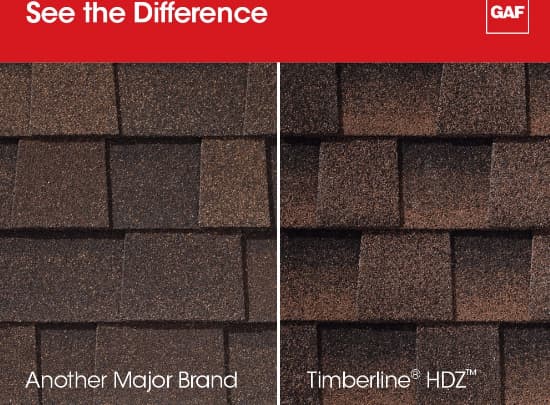
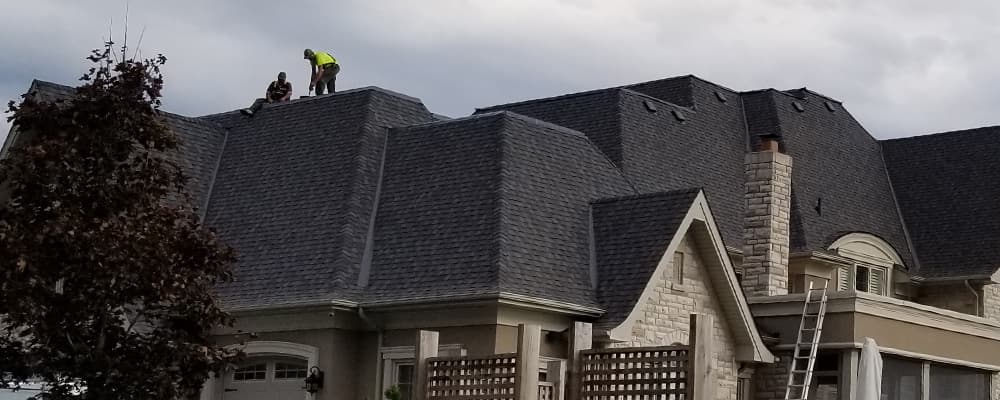
If you go with the cheapest shingle or an off-brand you’ve never heard of, you’re going to be replacing your roof much earlier than someone who invests in a recognized brand with proven performance in Canadian conditions.
Read our Review on BP Shingles for more insight into what actually matters when you’re choosing materials.
Quality counts in this business. If you choose the right roofing contractor, you should be getting expert advice on the type of shingle that will give you the biggest bang for your buck—not just the cheapest option that checks a box.
Adequate Ventilation of Your Roof
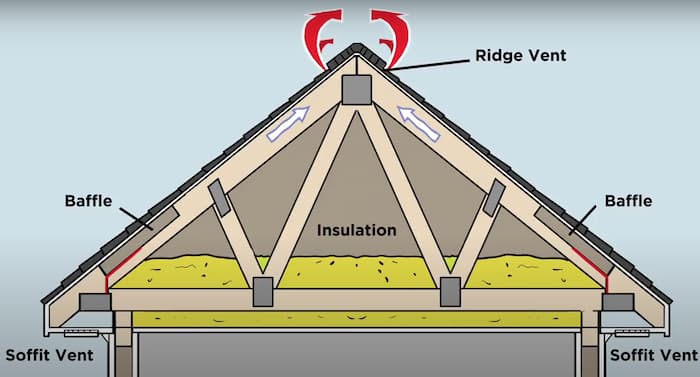
When your roof doesn’t have adequate ventilation, heat rises in your attic and gets trapped. Combined with moisture (which we have plenty of in Ontario), this leads to premature degradation of your shingles. They warp, the edges curl up, and eventually you get cracks that let wind and rain in.
Here’s what we see constantly: newer homes that were built fast and cheap with minimal attic ventilation. Those roofs are consistently failing 5-7 years earlier than they should.
Proper ventilation isn’t sexy and it costs money to fix if it wasn’t done right the first time. But it’s the difference between a 15-year roof and a 22-year roof.
Increased Exposure to Heavy Rainfall
Shingles last as long as the granules last. And granules get worn down by constantly running water.
Durham Region gets an average of 780mm of precipitation annually (that’s just over 30 inches for anyone still thinking imperial). That constant exposure wears out the protective granule layer faster than you’d see in drier climates.
Every time it rains, water is running over those shingles and slowly grinding away the granules that protect the asphalt underneath. More rain = faster granule loss = shorter roof life.
Increased Exposure to Heavy Snowfall
If you live anywhere near the snow belt of Ontario (looking at you, anyone east of Oshawa heading toward Peterborough), your roof is going to see significantly more snow than the rest of the province.
This shortens the life of your shingles because of constant contact with moisture from snow melt and freeze-thaw cycles.
Shingles become brittle at freezing temperatures. They’re more likely to crack and break when exposed to snow, ice, and the high winds that tend to come with winter storms.
Here’s something most people don’t think about: that snow sitting on your roof all winter? It’s not just sitting there. It’s melting during the day when the sun hits it, then refreezing at night. Every single cycle puts stress on your shingles.
\

Sun Exposure
Sunlight is both friend and enemy to asphalt shingles.
The asphalt heats up quickly and is particularly vulnerable to UV rays. Over time, the sun causes the protective coatings to deteriorate. Shingles in full sun will dry out and break down much faster than shingles that get some shade during the day.
This is why you see clay tile roofs in Florida and Arizona—they handle intense sun way better than asphalt. In Ontario we get enough cold weather that asphalt shingles make sense, but the south-facing slopes still take a beating.
We’ve seen roofs where the north side is in perfect shape and the south side looks 10 years older. Same shingles, same installation, different sun exposure.
Slope and Pitch of Your Roof
Shingles in Ontario last longer on steeper pitches. Three main reasons:
First, the sun’s rays are less direct on a steep slope, so the granules last longer. It’s like the difference between lying flat at the beach versus sitting up—you’re getting way more UV exposure when you’re horizontal.
Second, rain impacts a steep roof at an angle instead of straight-on. Less direct impact means less granule wear.
Third, snow slides off steep roofs instead of sitting there all winter creating freeze-thaw issues.
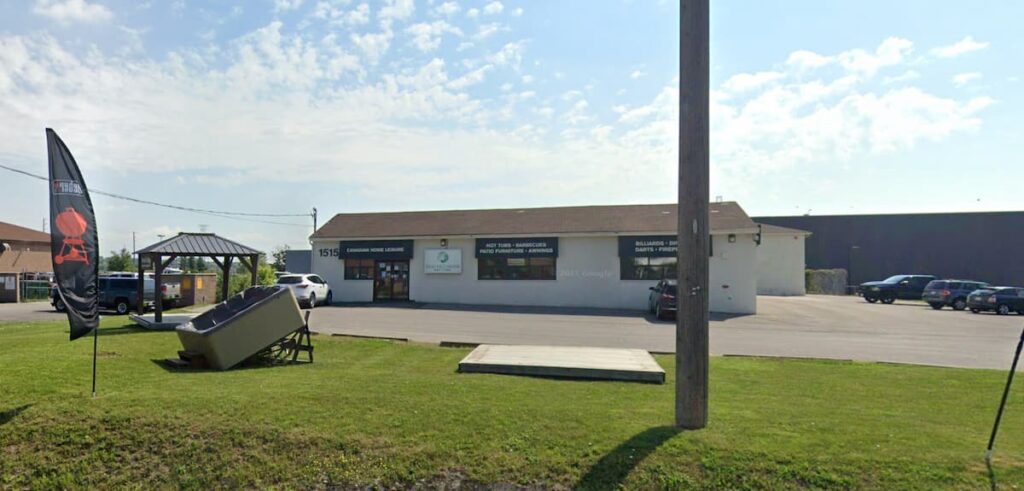
Unfortunately for our friends at Canadian Home Leisure in Whitby (great store by the way, check them out), their flat commercial roof will need replacement well before a steep residential pitch would.
Flat roofs in Ontario are basically asking for trouble. They work fine in Arizona where it doesn’t snow. Here? You’re looking at 12-15 years max instead of 20-25.
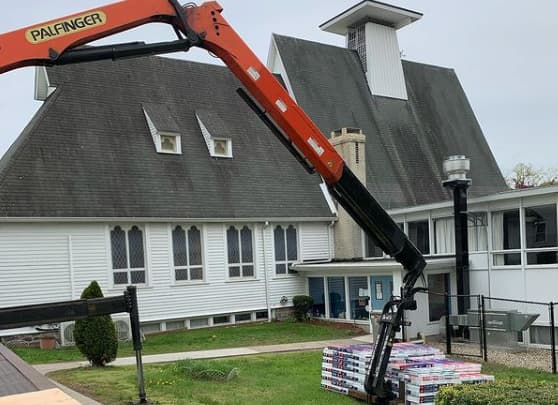
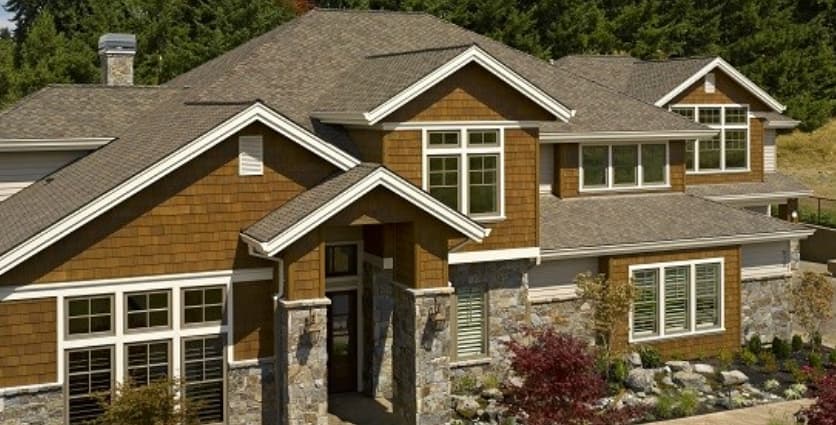
It’s a similar effect to lying out and tanning in the sun. When you’re flattened out, your body receives more direct sunlight and UV rays. In the world of shingle roofs-the flatter the slope and pitch, the faster your shingle will wear out. Unfortunately, our friends at Canadian Home Leisure will need to replace their roof well before the home in the image above.
Extreme Swings in Temperature
Basic physics, people.
Heat makes materials expand. Cold makes them contract. The swing from one extreme to another wreaks havoc on just about any material over 15-20 years.
If you’re from Durham Region or anywhere in southern Ontario, you already know about spring road construction. Winter leaves devastating potholes in the asphalt from freeze-thaw cycles and contraction due to cold temperatures.
Same thing happens to your roof.
Ontario’s temperature swings are particularly brutal because we’re not consistently cold (like Winnipeg) or consistently mild (like Vancouver). We’re all over the place. That variability is hell on shingles.
One day it’s -15°C, the next day it’s +5°C and raining. Your shingles are expanding and contracting like they’re doing calisthenics. Do that enough times and even the best materials start to fail.
Color of Shingles
Modern science reminder: darker colors absorb more heat from the sun.
In Ontario, that’s actually a benefit in winter—darker shingles absorb heat and improve your home’s insulation, which lowers energy bills because your furnace doesn’t work as hard.
The downside? Darker colors wear out faster in direct sunlight.
But keep in mind we only have about 4 out of 12 months of really hot weather. Everything else is moderate to oh-my-god-that’s-cold temperatures. So for most Ontario homes, the winter benefit outweighs the summer drawback.
Light gray or white shingles will technically last longer, but they won’t help you much in January when your heating bill comes in.
Two-Layered Roofing
Here’s something that sounds like a good idea but almost never is: installing new shingles over old shingles.
If you’re re-roofing over shingles that aren’t completely flat—if they have curled edges or are slightly raised—you’re creating an uneven surface that will cause the new shingles to fail faster.
Plus, you’re adding extra weight to your roof deck that it wasn’t designed to handle. And here’s the kicker: some manufacturers will void the warranty on your new shingles if they’re installed over old ones.
We see this all the time. Someone wanted to save $2,000 by not tearing off the old roof, and now they’re dealing with premature failure and no warranty coverage. That $2,000 savings just cost them $10,000.
Wear and Tear from Neighboring Trees
Trees cause more roof damage than most people realize.
If branches are growing close to your roof, they’re rubbing against it in the wind. That friction lifts shingles and creates gaps where water can get in. Basically putting holes in your roof one windstorm at a time.
Then there’s the debris factor. Smaller branches, twigs, leaves—all of it blowing across your roof and wearing away the granules on your shingles. It’s like sandpaper in slow motion.
If you have large trees close to your house, strategic trimming can add 3-5 years to your roof’s life. We’re not saying cut down the trees (although sometimes that’s the right call), but keep them from directly overhanging your roof.
What You Can Actually Do About It
Alright, enough doom and gloom. Let’s talk about what’s in your control.
Clean Your Gutters Twice a Year
This is simple and makes a massive difference. Clogged gutters cause water to back up under your shingles, leading to leaks and rot. Clean them in spring and fall. Every single year. No exceptions.
Doing this consistently can add 2-3 years to your roof’s lifespan. Not doing it can cut 5 years off. Your call.
Trim Those Trees
We mentioned this already, but it bears repeating. Keep branches at least 6-8 feet away from your roof. Hire a tree service if you need to—it’ll cost you $500-1000 depending on the size, but that’s way cheaper than replacing your roof early.
Annual Inspections (DIY or Professional)
You don’t need to hire someone every year, but you should be looking at your roof at least once annually. Use binoculars from the ground if you don’t want to get on a ladder.
Look for:
- Missing or damaged shingles
- Granules collecting in your gutters (sign of wear)
- Moss or algae growth
- Sagging areas
- Damaged flashing around chimneys or vents
Catch problems early and you can often fix them for a few hundred dollars instead of waiting until you need a whole new roof.
Address Ventilation Issues
If your attic is consistently hot in summer or you’re getting ice dams in winter, you probably have a ventilation problem. This one usually requires a professional to fix, but it’s worth every penny.
Proper ventilation can extend your roof life by 5-7 years. That’s potentially $5,000-7,000 in saved replacement costs.
Document Everything
Take photos of your roof after installation. Keep all receipts and warranty information. If you ever need to file an insurance claim, having documentation makes the process way smoother.
Speaking of which…
The Insurance Angle (That Your Agent Probably Didn’t Mention)
Installation quality directly affects insurance claims.
If your roof fails prematurely and you try to claim storm damage, the insurance adjuster is going to look at how it was installed. If they find evidence of poor installation (improper nail placement, inadequate sealant, missing drip edge), they can deny the claim.
We’ve seen it happen. Homeowner saves money hiring a cheap contractor, roof fails after a windstorm, insurance company sends an adjuster, adjuster finds installation defects, claim denied.
Suddenly that $3,000 you saved on installation is going to cost you $15,000 in uncovered replacement.
Also worth knowing: most insurance companies start getting twitchy about coverage once your roof hits 15-20 years old. Some will require inspections, some will reduce coverage, some will drop you entirely if you don’t replace it.
Keep records of maintenance and repairs. If you can show you’ve been taking care of your roof, it helps your case if you ever need to make a claim.
How Much Does It Really Depend? (Side-by-Side Comparison)
Let’s put some real numbers to “it depends”:
Scenario A: Budget Installation in Harsh Conditions
- Entry-level shingles: $8,000
- Minimal ventilation, no improvements
- House in Pickering facing Lake Ontario, flat roof
- No maintenance, trees overhanging
- Dark shingles, south-facing exposure
- Installed in late October when it’s cold
Expected lifespan: 12-15 years
Scenario B: Quality Installation in Ideal Conditions
- Mid-range architectural shingles: $13,000
- Proper ventilation, all issues addressed
- House in Ajax, steep pitch, some shade from trees (but not overhanging)
- Regular maintenance, gutters cleaned
- Medium-color shingles
- Installed in June with good weather
Expected lifespan: 22-25 years
The difference? About $5,000 upfront for an extra 10 years of roof life. Plus you’re dealing with one replacement instead of two.
Same Durham Region weather, totally different outcomes.
Why Most Ontarians Don’t Choose Metal (Even Though It Lasts Longer)
Quick answer: cost and aesthetics.
Metal roofs last 35-50 years and handle Ontario weather beautifully. They shed snow, don’t absorb UV damage the same way asphalt does, and require minimal maintenance.
So why doesn’t everyone get metal?
Cost is the big one. A metal roof runs about $18,000-25,000 for the same house that would cost $10,000-13,000 for asphalt shingles. Yes, you’ll probably never replace it again, but that’s a big upfront investment that not everyone can justify.
Then there’s aesthetics. Most neighborhoods in Whitby, Oshawa, Ajax—they’re all asphalt shingles. Metal roofs look different. Some people love that, most people just want to match their neighbors.
And here’s something most roofers won’t mention: metal roofs are LOUD when it rains or hails. If you’ve got good attic insulation it’s not that bad, but it’s definitely more noticeable than asphalt.
For most Ontario homeowners, quality asphalt shingles with proper installation hit the sweet spot of cost, performance, and aesthetics. Metal makes sense for some situations—commercial buildings, cottages, homes in heavy snow areas—but it’s not the default choice for good reason.
Bottom Line (After 20+ Years of Durham Region Roofs)
So, how long do roof shingles last in Ontario?
If everything goes right: 20-25 years. If some things go wrong: 15-18 years. If a lot of things go wrong: 10-15 years.
We’ve been roofing homes in southern Ontario for over 20 years now. We’ve seen what works and what doesn’t. We’ve fixed mistakes from contractors who took shortcuts, and we’ve replaced roofs that failed way earlier than they should have.
Here’s what we know for sure: the initial installation matters more than almost anything else. You can have the best shingles money can buy, but if they’re installed incorrectly or in poor conditions, they won’t perform.
The second thing that matters? Paying attention to your roof BEFORE there’s a problem. The homeowners who get 25 years out of their roof are the ones who clean their gutters, trim their trees, and call us when they notice something looks off.
The ones who get 12 years are usually the ones who never thought about their roof until water was dripping through the ceiling.
No matter what situation you’re in, we’ve seen it before. We know exactly what Durham Region weather does to roofs because we’ve been watching it happen for two decades.
If you want to actually max out your shingles’ lifespan instead of just hoping for the best, we’d love to help you out. Whether you need a consultation, an inspection, or a quote for replacement—we’ve got your back.
Don’t leave it to chance. Give us a call.
Let us help you max out your shingles lifespan
Don’t leave anything to chance. If you want to know how long do roof shingles last in Ontario, we would love to help you out. We’ve been roofing homes in southern Ontario for 27 years now. No matter what situation you’re in, we’ve seen it before and we have a solution that’s right for you. If you need consultation or a quote on your roof, don’t hesitate to contact us!
Read our Review on BP Shingles for more insight into the industry
Quality counts in this business and if you choose the right roofing contractor you should be getting expert advice on the type of shingle that will give you the biggest bang for your buck.