
Attic Baffles in Whitby: What Happens When Insulation Blocks Your Soffit Vents
The short answer
Attic baffles are channels fitted between the rafters at the edge of the attic that hold insulation back so air can still enter through the soffit vents. Without them, loose insulation drifts into the eave, seals the intake, and the attic stops breathing.
Most Whitby attics we open have either no baffles at all or baffles in only some of the rafter bays.
Eaves packed solid? Book a free attic check or call (905) 430-7911.
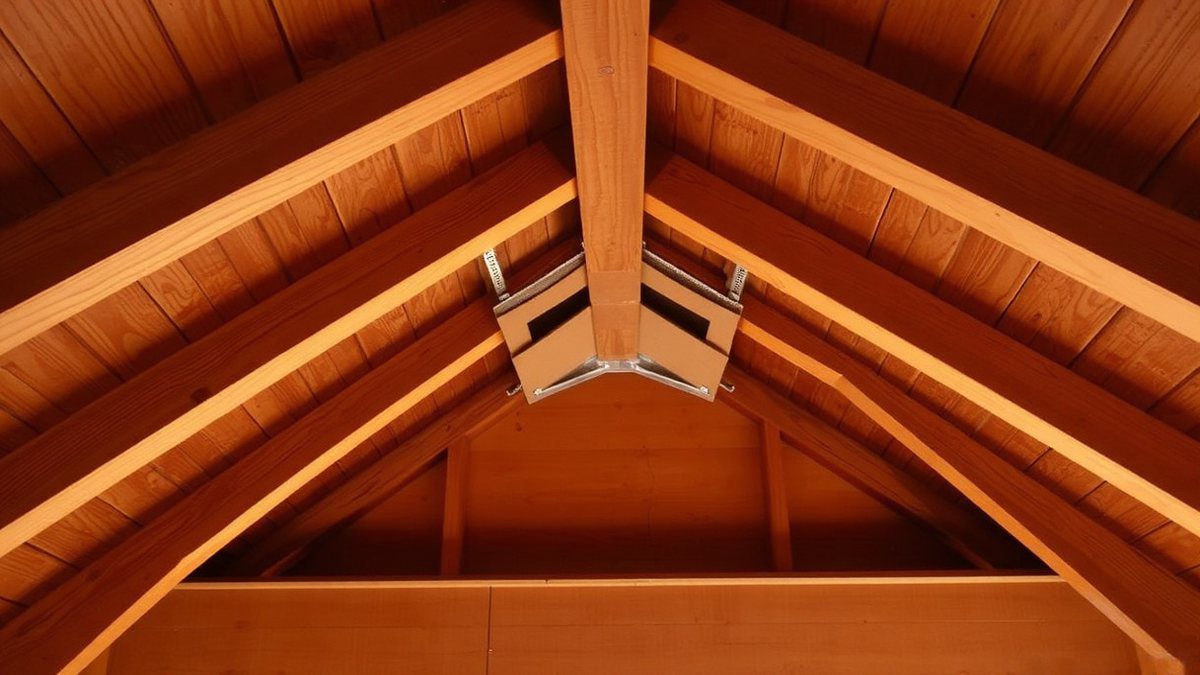
What a blocked eave looks like across Durham Region
The pattern changes with the decade a street was built.
In the older parts of Whitby and out through Ashburn, the problem is usually history. Someone topped the attic up in the nineties, blew the material straight into the corner, and nobody fitted a stop. Thirty years of wind through the soffit has since scoured insulation off the middle of the attic and piled it where it does the most harm.
In Brooklin and across the Oshawa line in Columbus and Kedron, the newer builds often came with baffles from the start, but only in the bays the installer could reach easily. Skip every third bay and you have a ventilation system with holes in it.
There is a third version we find on older Whitby homes specifically: perforated aluminum soffit installed over the original closed wood soffit, with nobody cutting the wood open behind it. The vents look perfect from the driveway. There is solid board behind them.
The thing nobody says about baffles
Baffles get sold as a ventilation upgrade. They are not an upgrade. They are the thing that stops your insulation from destroying your ventilation.
The important consequence is the order of work. Fitting baffles after the insulation is already blown is slow, awkward and expensive, because somebody has to crawl the perimeter pulling material back by hand. Fitting them before costs almost nothing.
So a cheap quote that leaves them out is not cheaper. It is a bill you pay later with the labour doubled.
Five reasons a Whitby eave ends up blocked
1. Blown insulation drifts
Loose fill does not stay where it lands. The hose throws material toward the perimeter, which is exactly the wrong direction, and the eave is where it settles.
2. Nobody fitted a stop
If no baffle was ever installed, there is nothing physically preventing the insulation from reaching the roof deck at the edge. This is the most common cause by a distance.
3. Wind scouring
Open soffits in an exposed attic push loose material inward from the vents and heap it at the corners. Houses backing onto open fields north of Whitby get this badly.
4. Later trades
Anyone who goes up to run a wire, install a fan or chase a leak disturbs the edge. A few visits over twenty years is enough.
5. Soffit that was never opened
Aluminum vents fitted over solid wood, or soffit that got closed up during a siding job. The intake was never there to block.
Want to know which one you have? Get a free attic check or call (905) 430-7911.
What it costs to get it wrong
A sealed intake stops the loop that keeps a cold roof cold. Moisture from the house collects against the sheathing instead of being carried out, which is what produces attic frost and the ceiling stains that follow a thaw.
In summer the same dead air bakes the shingles from underneath and shortens the life of a roof you have already paid for. In winter the trapped warmth melts the snowpack over the heated part of the roof while the eave stays frozen, which is the mechanism behind ice damming at the gutter line.
There is a warranty angle too. Shingle manufacturers tie coverage to adequate ventilation, and a roof that cooked because the intake was sealed is a difficult claim to win.
Attic baffles compared: which material lasts
They all do the same job. They differ in how they survive an attic.
| Type | Holds its shape | Handles moisture | Fitting in a tight eave | Best for |
|---|---|---|---|---|
| Cardboard | Poor over time | Softens if it gets wet | Easy, cuts with a knife | Dry attics, low budget |
| Rigid plastic or PVC | Very good | Unaffected | Stiff, awkward in low eaves | Attics with a damp history |
| Expanded polystyrene | Good | Unaffected | Easy, snaps to fit | Most retrofits |
| Site-built plywood or board | Excellent | Depends on the board | Slow, needs cutting on site | Odd framing and wide bays |
On a standard Whitby truss roof we use a rigid baffle in every bay around the perimeter. Cardboard is fine in a dry attic but we would rather not put a paper product where moisture has already been a problem.
What you can do about it
Start from the ground. On a bright day, look up at the soffit and check the vents are genuinely open rather than painted over or fitted across solid board.
Then get a light into the attic and look along the edge where the roof meets the floor. You want a clear channel and, ideally, a glimpse of daylight past the insulation. If you are looking at a wall of material pressed against the underside of the roof, the intake is gone.
Putting it right means pulling the insulation back from the perimeter, confirming the soffit is actually open behind the aluminum, fitting a baffle in every bay that has a vent behind it, then checking the ridge exhaust matches the new intake. Insulation goes back last, to full depth, never touching the deck at the edge.
We fit baffles as standard on every attic insulation job in Whitby. If the soffit itself is damaged or sagging, that is a separate fix and it is covered on our soffit and fascia page.
Local rules and conditions in Whitby
Baffles and an insulation top-up are maintenance work. They do not need a permit from the Town of Whitby, which reserves building permits for projects like new homes, additions, finished basements, garages and structural changes. Replacing rotted roof sheathing is a different matter, and Building Services is at 905.430.4305 if the job grows.
Two conditions that matter here. Durham sits under lake-effect snow, so our roofs hold a load longer than inland ones and an unventilated attic has more time to melt it from below. And the wind exposure north of Taunton Road, out toward Ashburn and the open country, moves loose insulation around far more than a sheltered street in town does.
Request your free attic check or call (905) 430-7911.
People also ask
Are baffles in the attic necessary?
In a vented attic, yes. Without them nothing holds insulation off the roof deck at the eave, so the soffit intake seals and the attic cannot dry. They are not optional on any attic that relies on soffit-to-ridge airflow.
What do baffles do in the attic?
They keep a clear channel between the top of the insulation and the underside of the roof sheathing at the edge, so air entering the soffit has a path up into the attic. They also stop loose fill spilling out through the vents.
Do you put baffles in every rafter?
In every bay that has a soffit vent behind it, which on most Whitby homes means the full perimeter. Skipping bays leaves dead pockets where moisture gathers, and the saving is not worth mentioning.
How much does it cost to install baffles in an attic?
The baffle itself is a few dollars a bay. What drives the cost is access and whether insulation has to be pulled back by hand first. Fitted during a top-up it is close to free. Retrofitted into a full attic it is a labour job.
How many baffles do you need in your attic?
One per rafter or truss bay around the vented perimeter. Count the bays along the eaves rather than guessing from the square footage.
Does Home Depot sell roof baffles?
Baffles are widely available from building supply retailers in cardboard, polystyrene and rigid plastic. Buying them is the easy part. The awkward part is fitting them in the lowest, tightest corner of the attic without wearing the old insulation.
Questions Whitby homeowners ask us
Can I fit baffles myself?
Plenty of people do. You are working over ceiling joists with no footing in the tightest part of the attic, pulling back material that is often dusty and old, so it is worth being honest about whether you want to be the one doing it.
Will baffles alone fix a damp attic?
They fix the intake side. If warm moist air is still leaking up through the ceiling, you need the air sealing as well. Ventilation removes moisture that reaches the attic, air sealing stops it arriving.
Do baffles reduce how much insulation I can have?
Only at the very edge, where depth was never doing much anyway. Across the rest of the attic floor the insulation goes to full depth with the baffle sitting above it.
My soffits look fine from outside. Do I still need to check?
Yes. The most common blockage is on the inside face, where insulation is pressed against the opening. From the driveway it looks perfect.
The bottom line after three decades of Durham attics
C.D. Roofing has worked on Whitby and Durham Region roofs since 1994 with our own crews, and blocked eaves are the single most common ventilation fault we find. It is also the cheapest one to put right, provided it gets done at the same time as the insulation rather than two winters later.
If you want the background on why a cold roof needs to breathe at all, Natural Resources Canada explains how a vented roof assembly is meant to work in proper detail. The province also lists which home efficiency upgrades currently qualify for support, insulation and air sealing included.
Our rating sits at 4.8 across 115 Google reviews as of November 2026, the workmanship warranty runs ten years, and looking at your eaves costs nothing.
See how we handle attic insulation in Whitby or call (905) 430-7911.