
Attic Frost in Whitby: Why Is There Frost in My Attic?
The short answer
Attic frost is warm, moist air from inside your house freezing on the cold underside of your roof. It is not a roof leak. In Whitby it is almost always air escaping through gaps in the ceiling, not a problem with the shingles.
It matters because the frost melts, and the water then runs into the insulation and shows up on the ceiling below.
Thin attic? Frost on the plywood? Book a free attic check or call (905) 430-7911.
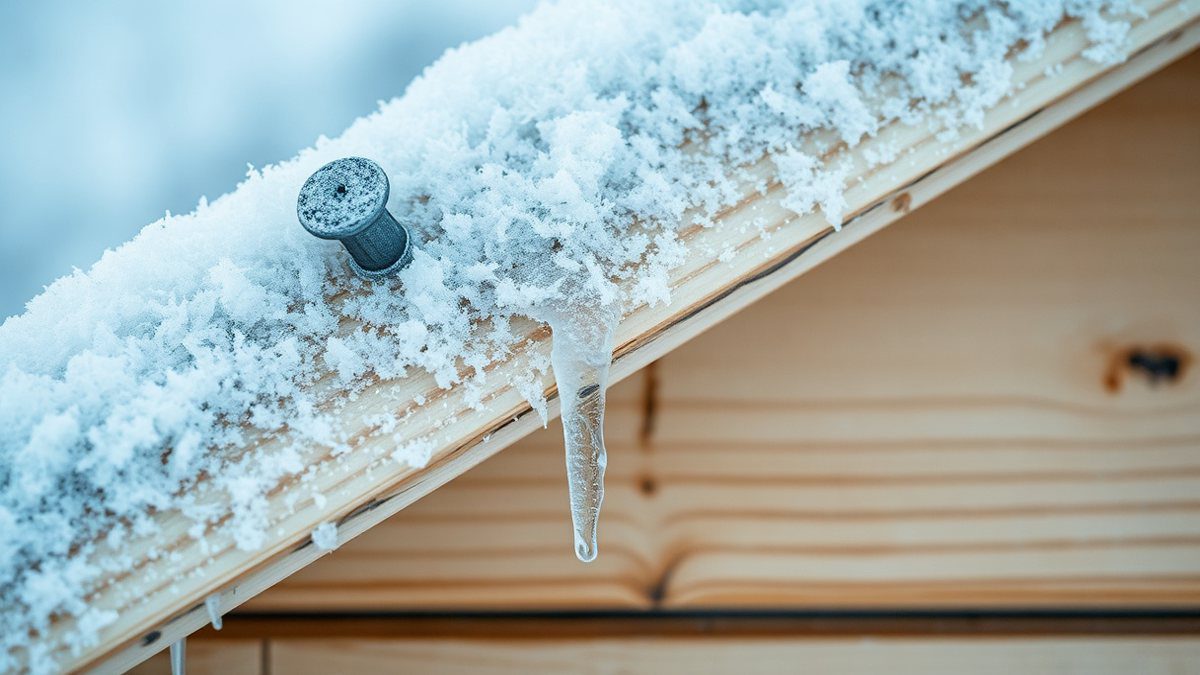
The Durham Region reality
Durham gets the conditions that make attic frost close to inevitable in a leaky house: long stretches below freezing, humidity off Lake Ontario, and repeated thaws rather than one long freeze.
That thaw cycle does the damage. In a colder, drier climate frost can sit on the sheathing for months. Here it builds, melts, and builds again.
The housing stock makes it worse. Brooklin, Ashburn and Myrtle Station hold a lot of late-1980s and 1990s construction with shallow insulation and soffits that were never baffled. Across the Oshawa line in Columbus, Windfields, Kedron and Taunton the newer subdivisions have the opposite problem: tight houses full of pot lights, where every fixture is a hole in the ceiling.
Different decades, same result: warm wet air gets above the ceiling with nowhere to go.
What nobody tells you about attic frost
Almost everyone who finds frost up there concludes the same thing: not enough insulation. So they add more. That usually makes it worse.
Insulation slows heat. It does not stop air, and air carries the moisture. Blowing another layer over an unsealed ceiling buries the holes without closing them, and it leaves the roof deck colder, so the moisture still getting up there condenses faster than before.
Seal the ceiling first, then ventilation, then insulation. In that order every time.
Five things that put frost in a Whitby attic
1. The attic hatch
Usually the worst single leak in the house. A bare panel resting in a frame with no gasket and no insulation on top is an open chimney into the attic, and the cheapest thing here to fix.
2. Pot lights
Older housings vent by design. Twenty of them is twenty continuous leaks, which is why newer Windfields and Taunton builds frost up despite decent insulation depth.
3. Bathroom and kitchen fans
Two faults here. The gap around the housing leaks, and on plenty of houses the duct never reaches the outside. A fan discharging into the attic puts shower moisture straight onto the sheathing.
4. Blocked soffit vents
A vented attic needs air entering low at the eaves. Insulation packed into that corner seals the intake, so moisture cannot dry out. Baffles prevent exactly this, and plenty of attics never got them.
5. Indoor humidity
A furnace humidifier running high through February will frost an attic on its own, as will drying laundry indoors. Free to correct.
Not sure which of the five you have? Get a free attic check or call (905) 430-7911.
What it costs to get it wrong
Frost that returns every winter slowly soaks the roof sheathing. Wet plywood grows mould, loses strength and eventually has to be replaced, which turns a straightforward air sealing job into a deck replacement during a re-roof.
Natural Resources Canada is blunt about the decision point: examine the existing material for type, condition and depth, and if it has been damaged or contaminated by mould or vermin, remove it. Once the layer is wet enough to stain, you are not topping up, you are paying to take it out first.
The same trapped heat melts snow unevenly, feeding ice at the eaves and backing water up under the shingles. One problem in the ceiling quietly becomes three.
Frost, attic rain and a real roof leak
These get confused constantly, and the difference decides who you call.
| What you see | Attic frost | Attic rain | Actual roof leak |
|---|---|---|---|
| When it shows up | Cold, dry weather | The day of a thaw | During or after rain or melting snow |
| Where the water starts | Inside the house | Inside the house | Outside the house |
| First sign | White crust on plywood and nails | Ceiling stain with no rain | Ceiling stain during rain |
| Worst above | Bathrooms, kitchen, the hatch | Wherever frost was heaviest | Valleys, flashings, skylights |
| Shingles involved | No | No | Yes |
| What fixes it | Air sealing, then venting, then insulation | Same as frost, plus drying out | Roof repair |
The tell is the weather on the day the stain appeared. A stain during a January thaw with no rain in the forecast is condensation, not a leak.
What you can do about it
First, drop the humidifier setting and run the bathroom fans well past the end of every shower. Both are free and cut the load straight away.
Then get a light into the attic. The frost gathers directly above whatever is leaking, so find the heaviest patch, and check the eaves are clear.
The work runs in a fixed order. Seal the ceiling penetrations, gasket and insulate the hatch, fit baffles in every rafter bay so the soffit intake stays open, match the ridge exhaust to the intake, correct any fan duct that stops short of the outside, and only then bring the insulation to depth.
That sequence is what our attic insulation work in Whitby is built around, and why we will not quote a top-up without seeing the attic. If the sheathing is stained, the ventilation side needs sorting too.
Request your free attic check or call (905) 430-7911.
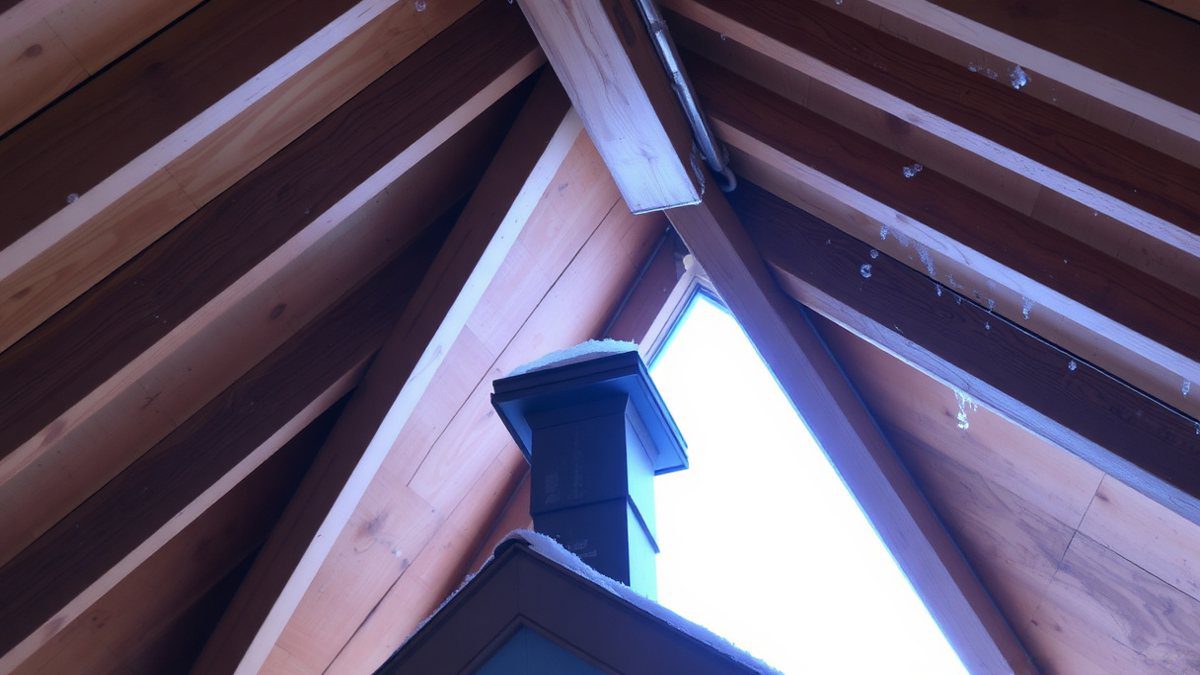
Local rules, permits and conditions in Whitby
Air sealing, baffles and a top-up are maintenance and need no building permit from the Town of Whitby, which reserves permits for new homes, additions, finished basements, garages and structural changes. Building Services is at 905.430.4305 if your project turns out larger.
That changes if the frost has already taken the sheathing. Replacing roof deck is structural work, and that is when you want to know which renovations the Town expects a permit for.
Two local conditions worth knowing. Durham sits in a lake-fed snow belt, so roofs here hold a load longer than they do further west, and that snow is what an overheated attic melts from beneath. A good share of the older Whitby housing stock also predates the vapour barrier requirement, which is why sealing the ceiling as an air barrier matters more here than adding poly would.
People also ask
Why is my attic sweating?
Sweating and frost are the same process at different temperatures. Warm moist air from the house meets a cold surface and the moisture drops out. Above freezing you get droplets, below freezing you get frost. Either way it came from inside the house.
What is the 7 and 7 rule for attics?
A rough field guide some inspectors use: about seven degrees of temperature difference or seven percent of moisture difference between the attic and outside suggests the attic is not ventilating properly. It is a prompt to investigate, not a code requirement.
Is it worth putting a dehumidifier in the attic?
No. It treats the symptom, needs power and maintenance in a space nobody visits, and struggles in the cold. The moisture arrives from the house, so sealing the ceiling removes the source.
Can I remove insulation in an attic by myself?
Physically yes. The caution is what is in it. Wet or mouldy material and anything animals have lived in needs proper protection and disposal, and loose grey-brown granules that may be vermiculite should not be disturbed until tested.
Is it okay to leave old insulation in the attic?
Usually yes. If the existing layer is dry, not mouldy and free of animal contamination, blowing new insulation over the top is the normal and cheaper approach. It comes out when it is wet, flattened, mouldy or contaminated.
Why are people removing spray foam insulation?
Mostly where foam went onto a roof deck without the assembly being designed for it, or where it trapped moisture against the wood. That is a different decision from a conventional vented attic, which is what nearly every Whitby house has.
Questions Whitby homeowners ask us
Is a light frost on the nails something to worry about?
A dusting on nail tips during a hard cold snap is common. Nails conduct cold straight through the sheathing so they frost first. Frost spread across the plywood, or a solid white crust, is a different matter.
Can you do this work in the middle of winter?
Yes, and winter is the best time to diagnose it. Air sealing and baffles are interior attic work, and when the frost is visible it shows us exactly where the air is getting in.
Will fixing this lower my heating bill?
Usually, though the thing most people notice first is that the upstairs rooms stop being colder than the rest of the house. The draught they blamed on the windows was often coming down from the ceiling.
Do you have to take all the insulation out to seal the ceiling?
No. We pull it back from what needs sealing, do the work, then put it back before topping up. Full removal only happens when the material is wet, mouldy or contaminated.
What if the plywood is already stained?
Light staining on otherwise sound wood is usually fine once the moisture source is closed. Soft or delaminated sheathing is a re-roof conversation, and we will tell you that straight.
The bottom line after three decades of Durham winters
C.D. Roofing has worked on Whitby and Durham Region roofs since 1994, with our own crews rather than subcontractors. Attic frost is one of the most common things we get called about between January and March, and one of the most misdiagnosed.
The houses that stay dry are not the ones with the deepest insulation. They are the ones where somebody closed the holes in the ceiling and kept the eaves open. For the technical background, Natural Resources Canada sets out how heat and moisture move through a roof assembly in more depth than any contractor page will.
If there is frost above your ceiling this winter, look before spring rather than after the stain appears. Our rating sits at 4.8 across 115 Google reviews as of November 2026, the workmanship warranty is ten years, and the attic check costs nothing.
See how we approach attic insulation in Whitby, book the free attic check, or call (905) 430-7911.