
Sagging Roof Repair on a Wartime Home in Ajax
Real job. Real home. Real result. A homeowner in Ajax called us about a roof that was dipping in the middle — you could see the sway from the street. By the time we measured it, the low spot ran more than 5 inches deep across the front slope. That’s not a shingle problem. That’s the structure underneath giving way, and on an older wartime home it’s more common than most people think.
Here’s exactly what caused it, what we found when we got up there, what actually needed fixing versus what just looked rough, and how we took the dip out for good.
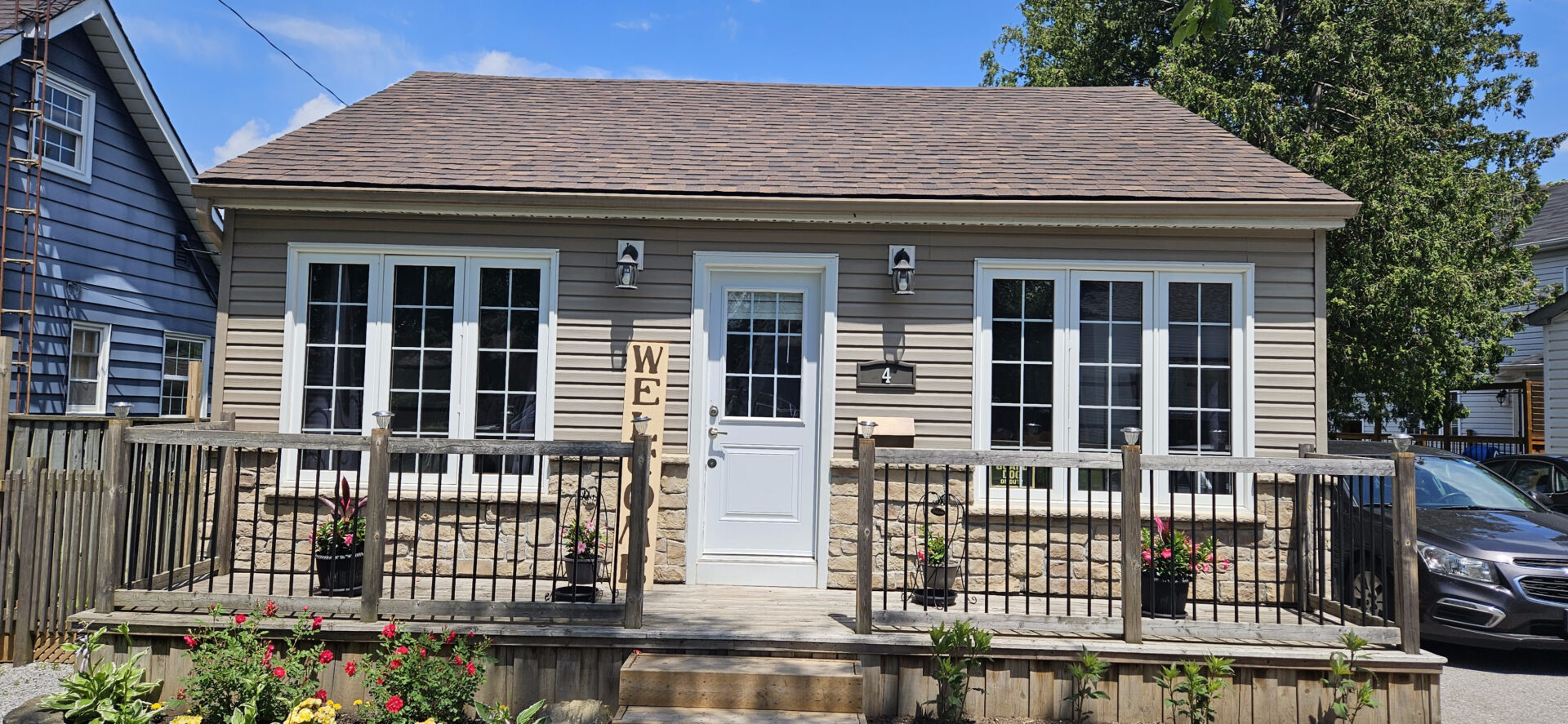
| Location | Ajax, Ontario |
|---|---|
| Home type | Original wartime home (1940s-era construction) |
| Problem | Structural roof sag — 5+ inch dip across the front slope |
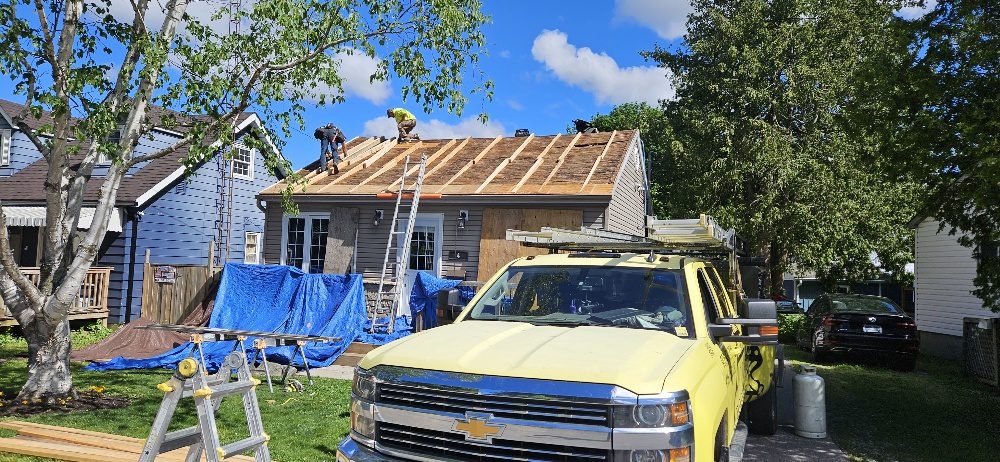
| Front roof | New tapered rafters, structural blocking, full new plywood decking, synthetic underlayment, new asphalt shingles |
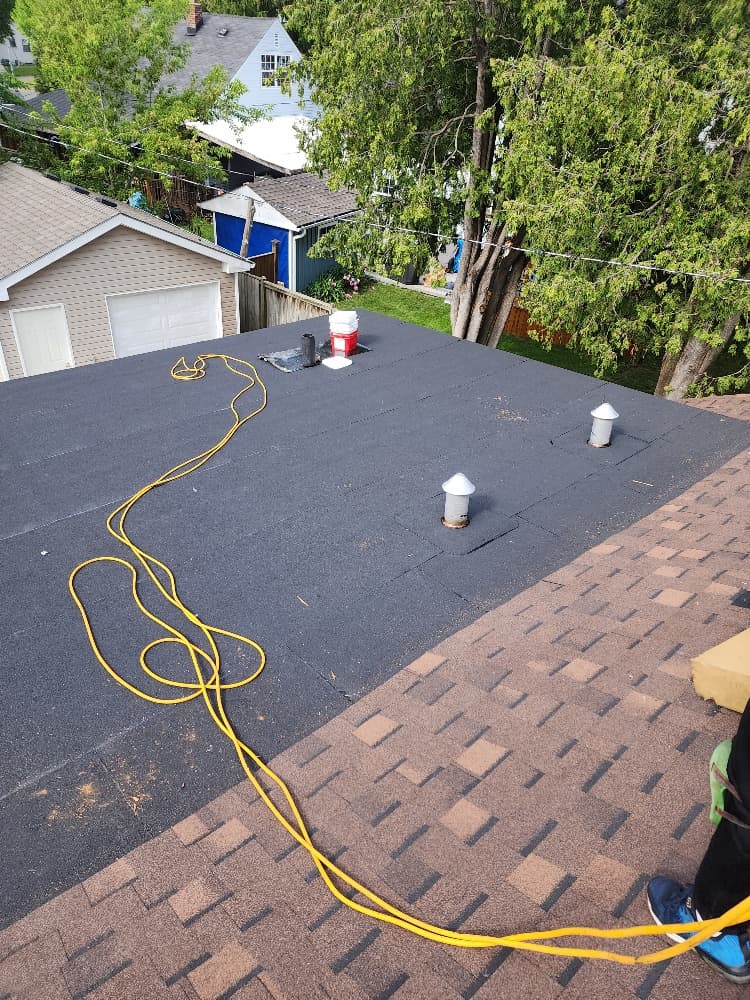
| Rear roof | New torch-on (modified bitumen) flat roof |
| Outcome | Straight, true roofline — and a 5-star Google review |
What Caused the Problem
Wartime homes were built fast and built to a budget — solid little houses, but framed with lightweight rafters and board sheathing instead of the engineered lumber and plywood we use today. Give that framing 70-plus years of snow load, summer heat, and moisture cycling through the wood, and it slowly settles. The rafters lose their straight line, the roof sinks in the middle, and you end up with the “swayback” dip you can spot from the curb.
It almost never happens overnight, which is the trap: because it creeps in slowly, homeowners get used to it — right up until it starts holding water and leaking.
What We Found When We Got Up There
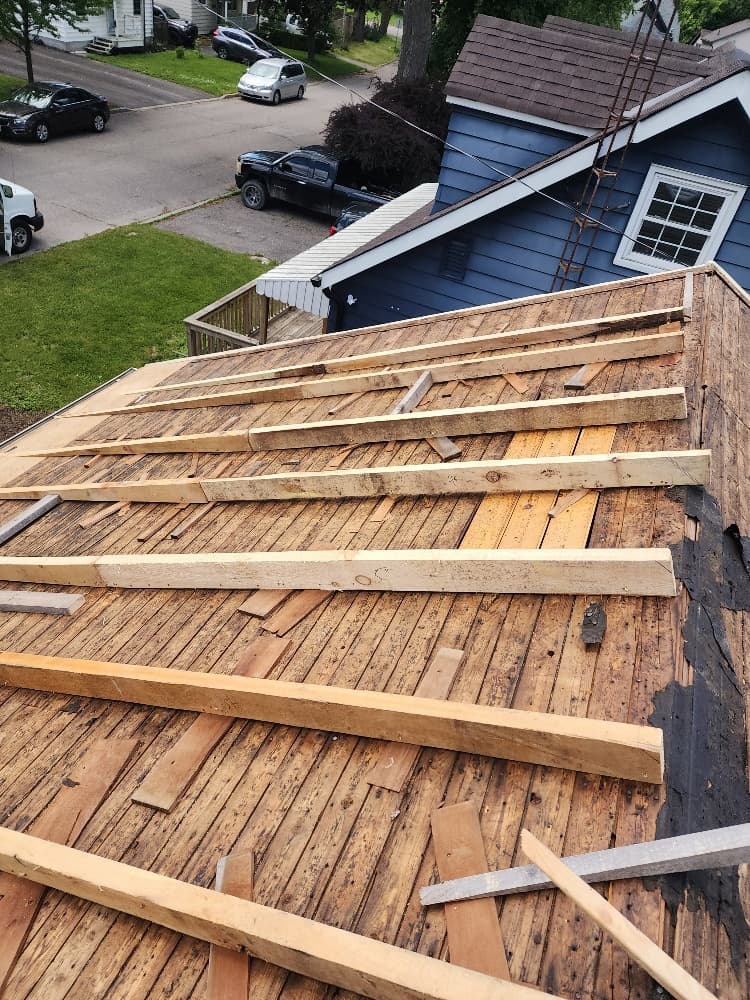
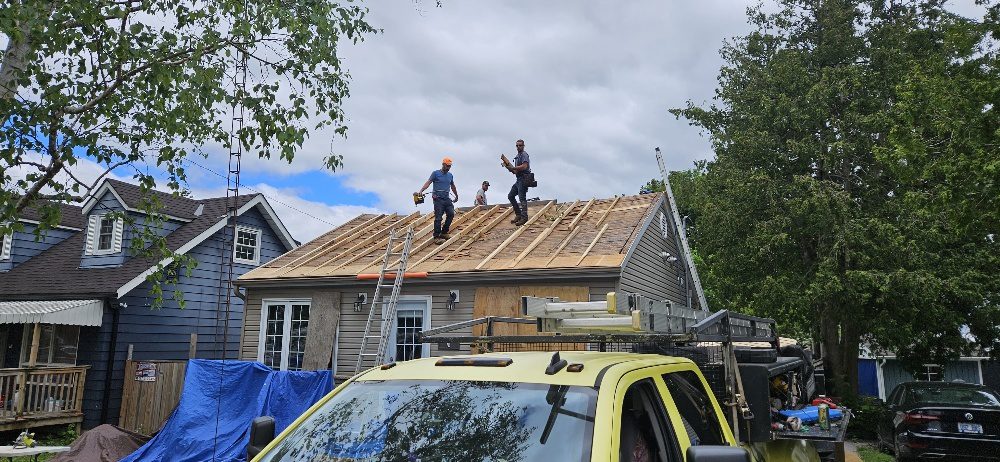
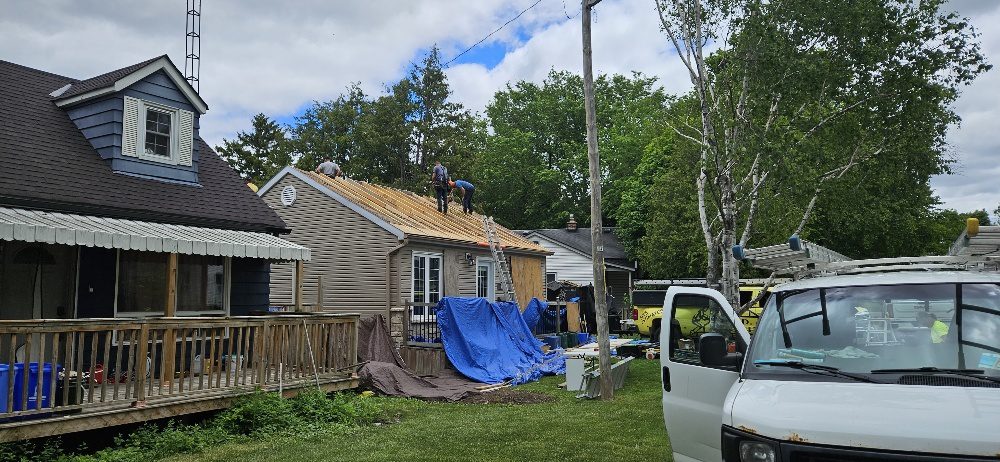
Once we stripped the old roof down to the framing, the story was obvious. The original board decking was cupped, split, and tired. The rafters had settled enough to leave a dip of more than 5 inches through the centre of the front slope. A roof that low in the middle doesn’t shed water — it collects it, which accelerates everything: the shingles wear unevenly, the deck stays damp, and the sag deepens.
What Actually Needed Fixing — and What Just Looked Bad
This is where an honest read of the roof matters. Plenty of what we uncovered looked alarming — weathered boards, dark staining, decades of wear — but cosmetic age isn’t what we were chasing. The real problem was structural: the framing had lost its shape, and no amount of new surface material fixes that.
And that’s the mistake a cheaper “fix” makes. Lay fresh shingles over a sagging deck and the new shingles just follow the dip — the roof still waves, still ponds, still fails early. You’ve spent money making a structural problem look better for a couple of years. To actually take the dip out, you have to rebuild the plane the roof rides on.
How We Handled It
Correcting the sag came down to rebuilding the structure underneath, in order:
- Cut and installed new tapered rafters. Each one is shaped to build the low centre of the roof back up to a straight plane, so the finished roofline runs true from ridge to eave.
- Blocked the framing for rigidity. Solid blocking between the rafters ties the structure together and stops the movement that caused the sag in the first place.
- Sheathed the whole slope in new plywood. Out with the old cupped boards, in with a full layer of new plywood — a flat, solid, modern nailing surface for the shingles.
- Installed synthetic underlayment. A strong secondary moisture barrier over the new deck before any shingles go down.
- Finished with new asphalt shingles. Clean, straight courses on a roofline that finally sits flat.
Taper the framing back to flat, lock it with blocking, deck it in fresh plywood — that sequence is what removed the dip. The moment the plywood went down, the front of the home had a straight roofline for the first time in years.
The Flat Roof at the Rear
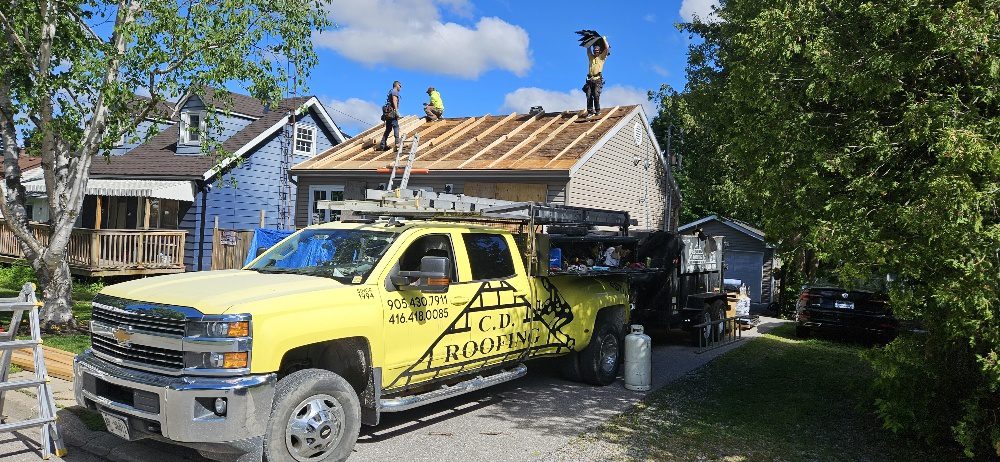
The back of the home had a low-slope section, and shingles don’t belong on a near-flat roof. There we installed a torch-on (modified bitumen) membrane — the same multi-layer, heat-welded system we use on commercial flat roofs. The seams are torched and fully bonded, giving a watertight surface built to handle ponding, freeze-thaw, and Durham Region winters. One home, two roofing systems, done in a single project.
The Outcome
The homeowner went from a roof that dipped more than 5 inches to a straight, structurally sound roofline up front and a brand-new flat roof at the back. The dip is gone, the roof sheds water the way it’s supposed to, and it’ll be decades before anyone needs to think about it again. They were thrilled — and left us a glowing 5-star review on Google.

★★★★★ “Friendly, efficient and explained everything in detail. They cleaned up after they finished. Excellent work.”
— Cathy Dwinell, Google review
Seeing a dip, wave, or low spot in your own roofline? Don’t wait for it to leak — a sag is a structural signal, and the earlier it’s caught, the simpler the fix.
Call (905) 430-7911 for a Free Estimate or Request a Quote Online
Ask about our referral offer — $500 off for you and a friend.
How to Tell If Your Roof Has a Structural Sag
A worn roof and a sagging roof are two different problems. These are the signs the issue is structural — and worth a call before it becomes a leak:
- A visible dip, curve, or “swayback” in the roofline when you look from the street
- A ridge line that’s no longer straight
- Water pooling or staining in one low area of the roof
- Interior signs — cracks where the ceiling meets the wall, or doors that suddenly stick
- An older home (wartime, century, or pre-1970s) with the original roof framing
- A previous “repair” where new shingles were laid over an existing wave
If any of those sound familiar, the smart move is an inspection now, while it’s still a framing fix and not a water-damage rebuild.
Roofing in Ajax & Durham Region
We’ve been repairing and rebuilding roofs across Ajax and Durham Region since 1994 — structural work, full replacements, flat roofs, and emergency repairs. Older Ajax neighbourhoods are full of homes from this era, and the framing under them tells a similar story. We know what to look for, and we’ll tell you straight whether your roof needs structural work or just a re-roof.
See more of our work on the Projects page — like our lightning-strike emergency repair in Pickering — or explore our Ajax roofing services, roof replacement, roof repair, and flat roofing. Every job is backed by our warranty coverage.
Frequently Asked Questions
Can a sagging roof be repaired without a full replacement?
Usually, yes. A sag is a framing problem, so the fix is structural — not necessarily a whole new roof. On this Ajax home we cut new tapered rafters, added blocking for rigidity, and installed full new plywood decking to take a 5-inch dip out before re-shingling. The key is rebuilding the structure, not just laying new shingles over the sag.
Why do older wartime homes get a dip in the roof?
Wartime homes were often framed with lightweight rafters and board sheathing. Over decades of snow load and moisture, that framing settles and the roof sinks in the middle. Correcting it means re-leveling or reinforcing the rafters and replacing the old boards with new plywood decking.
Is a roof sag dangerous?
A small sag isn’t an emergency, but it won’t fix itself and it tends to get worse. Left alone, a low spot ponds water, which accelerates rot in the deck and framing and eventually leaks into the home. Caught early, it’s a straightforward structural repair; left for years, it can become a far bigger rebuild.
What is a torch-on flat roof?
A torch-on roof is a modified bitumen membrane used on flat and low-slope roofs. The layers are heat-welded at the seams to create a fully bonded, watertight surface that stands up to ponding water and freeze-thaw cycles. We used it for the low-slope section at the rear of this Ajax home.
Does C.D. Roofing do structural roof work in Ajax?
Yes. We’ve handled structural roof repairs, rafter and decking replacement, shingle roofs, and torch-on flat roofs across Ajax and Durham Region since 1994. Call (905) 430-7911 for an inspection and quote.
C.D. Roofing & Construction Ltd.
202 South Blair St, Whitby, ON L1M 0C9
Serving Ajax, Pickering, Whitby, Oshawa, Bowmanville & Durham Region
Phone: (905) 430-7911
Email: info@cdroofingltd.com