
Lightning Strike Emergency Roofing Services in Pickering
Hits Your Roof
The Call
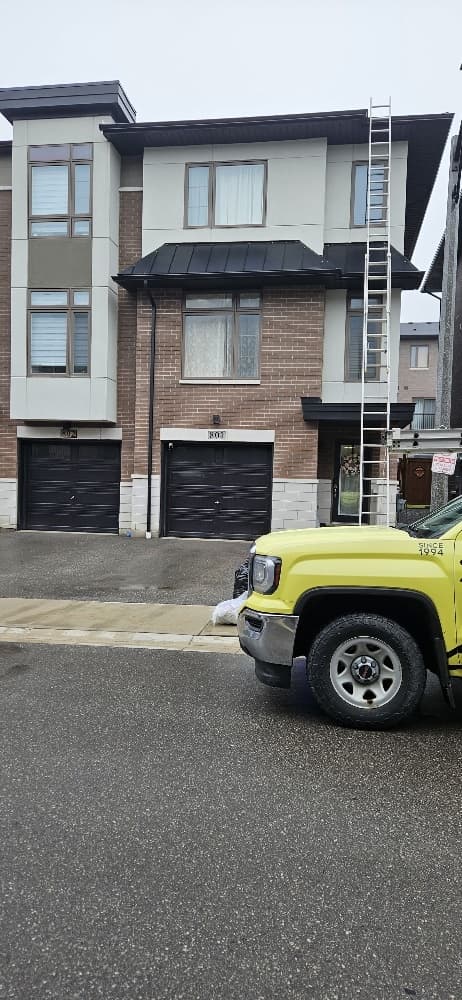
Nobody plans for a lightning strike. One storm rolls through Pickering and suddenly a homeowner is standing in their living room listening to rain where there shouldn’t be any. That’s exactly the kind of call we got on this one — and we were on site the same day.
Lightning strikes on residential roofs are rarer than storm damage or ice damming, but when they happen, the damage is hard to ignore. This wasn’t a missing shingle or a lifted ridge cap. The bolt had punched clean through, splitting the plywood decking and blowing shingles outward in every direction. The homeowner needed the roof secured before the next rainfall — not next week, not after an estimate chain — that day.
“The first priority in any emergency situation is stopping the bleeding. Everything else is a conversation for later.”
This is what emergency roofing actually looks like in practice. It’s not about a permanent fix on day one — it’s about getting a watertight barrier over an open hole before the interior takes water damage. That’s the job, and that’s what we did.
What We Found
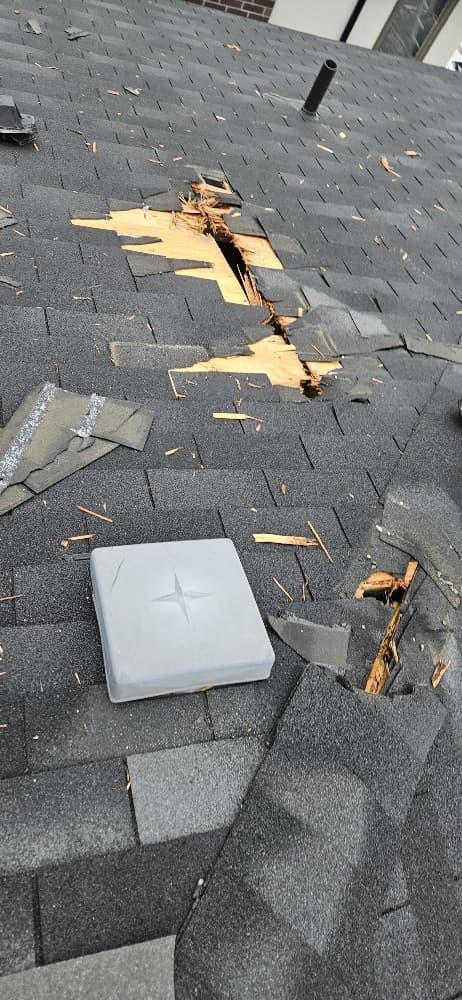
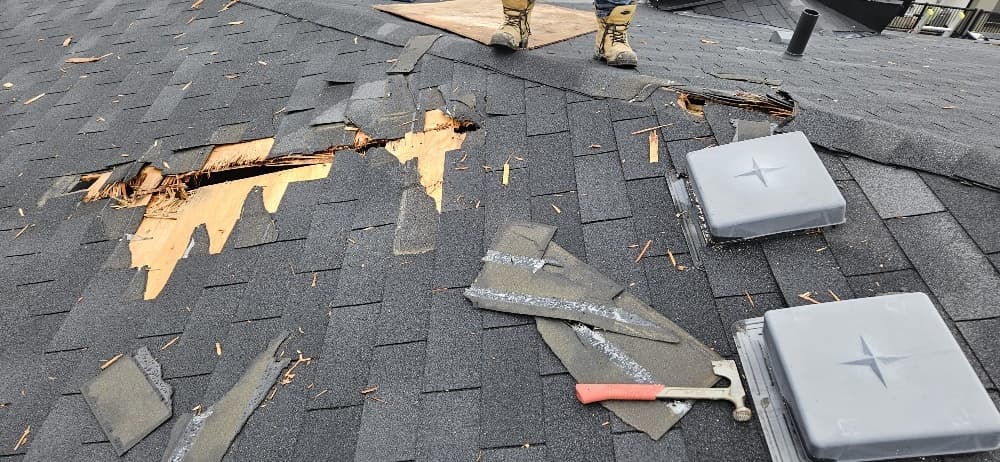
Getting up there told the full story. The strike had two distinct impact zones — a primary point of entry and a secondary blast pattern lower on the slope. The shingles hadn’t just lifted, they’d been thrown. Wood fragments were scattered across the entire roof surface, and the plywood decking beneath showed a jagged fracture running along the grain — the signature of a bolt that travels through structure looking for a ground path.
A roof vent had also been displaced in the process. Beyond the obvious breach, the surrounding shingles needed a close inspection to assess whether the thermal seal had been compromised by the force of impact. It had — to a wider radius than it looked from the ground.
This is exactly why “just patching over it” isn’t an answer on a lightning strike. The damage is rarely limited to what you can see from below.
The Work
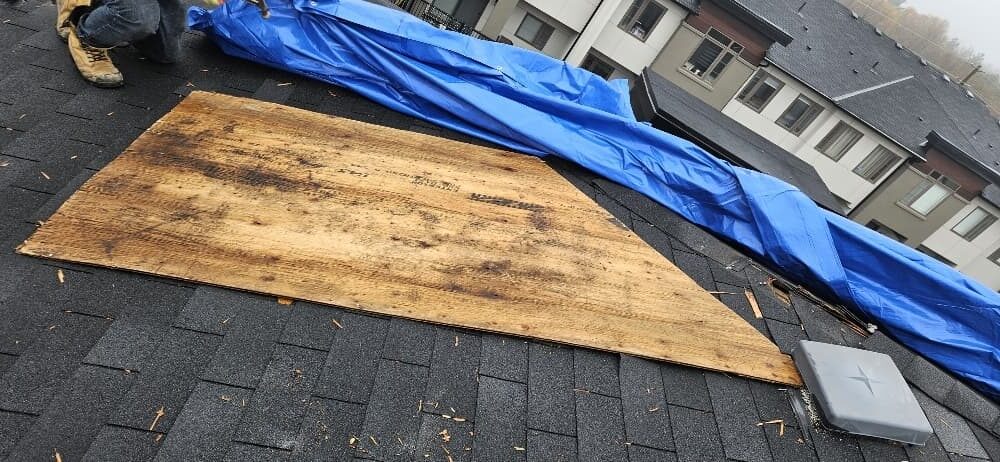
Once the damaged plywood was assessed, we removed the compromised sections — you can see the extent of it in the photo. The board pulled from that roof had scorch marks running its full length. That material had to come out. Leaving it in would have been doing the homeowner a disservice regardless of what went over top of it.
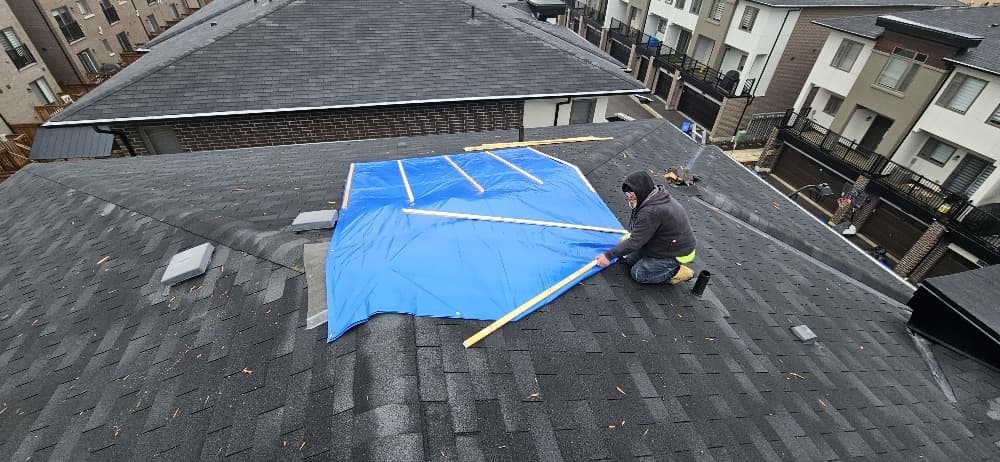
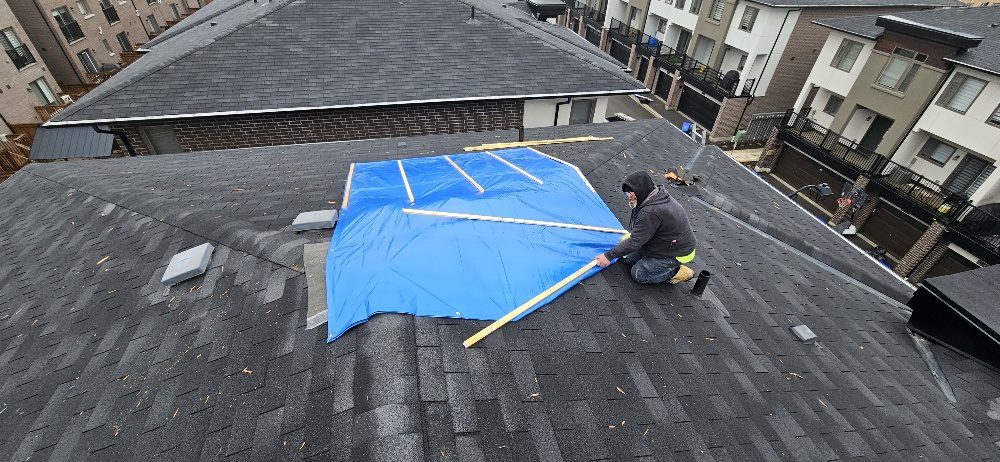
With the damaged plywood cleared and the opening properly prepped, we laid down ice shield over the exposed area before anything else went on. Ice shield on an emergency repair isn’t overkill — it’s the layer that stands between the structure and water while everything above it is still temporary. After that, a heavy-duty tarp went across the full affected zone, secured with wood strapping at regular intervals. This isn’t a flap-in-the-wind setup. The strapping holds the tarp flat against the roof so it sheds water properly rather than pooling in the middle and finding the one spot you missed.
The tarp job on a proper emergency isn’t an afterthought. Done right, it buys you the time to do the permanent repair correctly — with matched materials, clean workmanship, and no shortcuts — rather than rushing something together that you’re going to be looking at again in two years.
Why This Matters for Insurance
Lightning damage is almost universally covered under standard homeowner’s insurance — but that doesn’t mean the process takes care of itself. The documentation that comes out of an emergency visit matters more than most people realize. When we’re on site, we photograph everything. The scope of damage, the condition of surrounding materials, the deck, the shingle pattern. All of it.
Insurance adjusters don’t always make it out the same day, and a roof that’s been partially weathered between the strike and the inspection tells a murkier story than one that’s been properly documented and secured right away. We’ve seen it go sideways for homeowners who waited. A well-documented emergency response tends to make the claims process cleaner from start to finish.
We’re not insurance advisors — that’s not our lane. But we know how to make sure the physical evidence tells the truth about what happened to your roof.
The Outcome
The home was secured before rainfall that same evening. No water entered the interior — the homeowner had documentation, a proper assessment, and a clear picture of what the permanent repair would involve.
The Bottom Line
A lightning strike isn’t something you plan around. It’s one of those situations where your only real variable is who you call and how fast they show up. We’ve been doing this in Pickering and across Durham Region since 1994 — storm damage, ice dams, emergency calls at the wrong time of year in the wrong weather. This isn’t new territory for us.
If you’re dealing with damage that can’t wait for a scheduled appointment, call us. We’ll get there, assess it properly, and make sure your home is protected before we leave the site. Whatever comes next gets handled correctly.